
Why You Need a Home Inventory Before Disaster Strikes
A Strategic Approach to Cataloging Your Entire Home
Imagine that a hurricane just ripped through your neighborhood. Your roof’s damaged, water got inside, and you’re standing in what’s left of your home trying to file an insurance claim. The adjuster asks you to list everything that was damaged or destroyed.
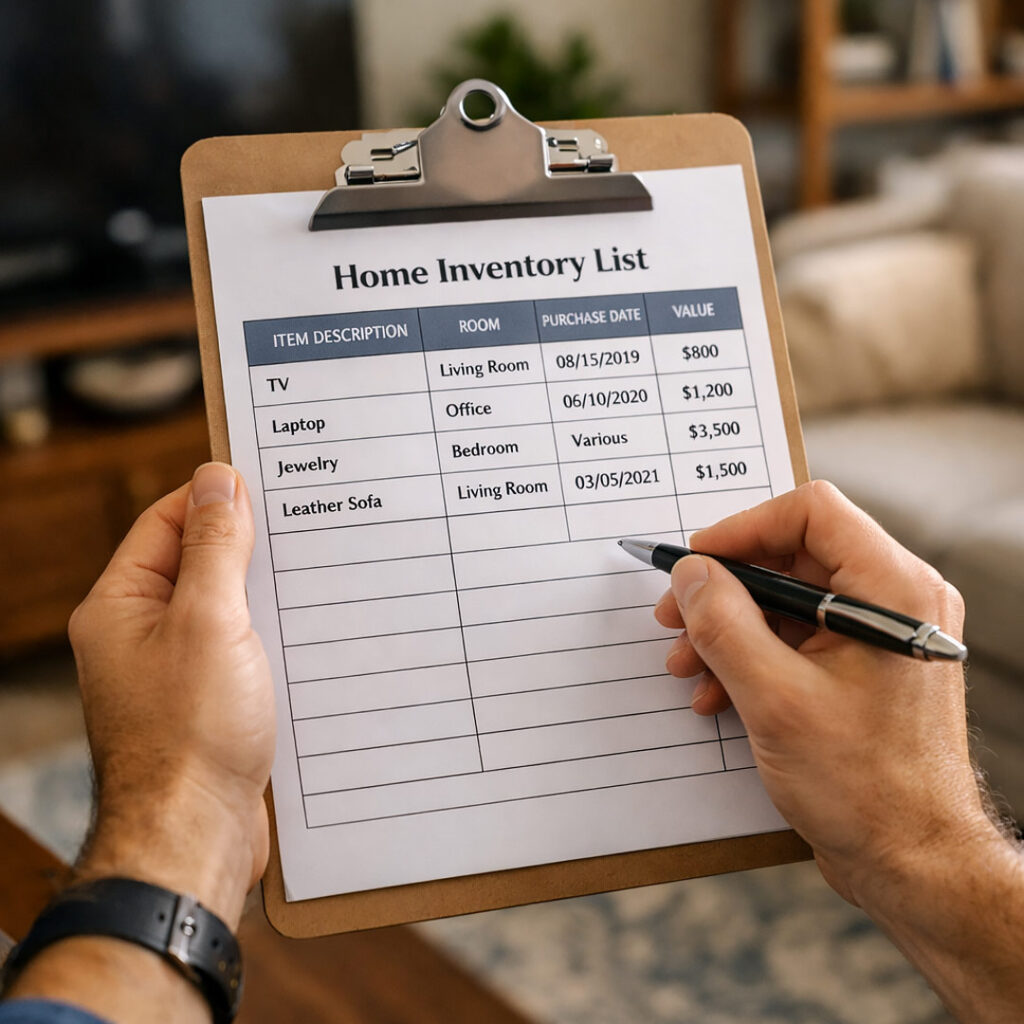
Can you do it? Can you remember every piece of furniture, every electronic device, every tool in the garage, every item of clothing? What about serial numbers, purchase dates, and what you paid for things?
Most people can’t. And that’s exactly when they realize they should have created a home inventory months ago.
A home inventory speeds up claims, maximizes your payout, and eliminates the nightmare of trying to remember everything you owned while you’re stressed and exhausted.
What Actually Goes in a Home Inventory
A home inventory is a complete record of everything you own:
- All furniture, electronics, and appliances
- Clothing and shoes (yes, even everyday stuff)
- Tools, equipment, and sporting goods
- Décor and household items
- High-value items like jewelry, collectibles, or antiques
The best inventory uses multiple formats—written lists, photos, and video. Each one captures different details that help prove what you owned.
Why This Matters When You File a Claim
After a loss, your insurance company wants proof. Without documentation, you’re looking at:
- Massive delays while you recreate lists from memory
- Lower payouts because you can’t prove what you owned or its worth
- Constant disputes with adjusters questioning every item
- Extra stress on top of everything else
A home inventory eliminates all of that. It gives the insurance company clear, verifiable proof of what you owned, what condition it was in, and what it was worth. Claims get processed faster, and you get paid what you’re actually owed.

How to Create One Without Going Crazy
You don’t need expensive software. You just need to be thorough and organized.
Go Room by Room
Don’t try to do the whole house at once—you’ll get overwhelmed. Start with one room and work through it completely.
For each item, note:
- What it is (be specific: “Samsung 55-inch 4K TV” not just “TV”)
- Brand and model number
- Approximate purchase date
- What you paid or current replacement value
- Serial numbers for electronics and appliances
Take Photos and Videos
Walk through your home with your phone and record everything:
- Wide shots of each room showing furniture and layout
- Close-ups of valuable items and electronics
- Labels, model numbers, and serial numbers (zoom in so they’re readable)
- Open closets and cabinets to show contents
- Garage, attic, and outdoor items too
Narrate as you go: “This is our living room, the couch is from Ashley Furniture, bought in 2022 for about $1,200…” It feels silly, but it’s incredibly helpful later.
Store Multiple Copies
If your home gets destroyed, an inventory stored in your desk drawer doesn’t help. You need backups.
Keep copies:
- In cloud storage (Google Drive, Dropbox, iCloud)
- On an external hard drive stored elsewhere (family member’s house, safe deposit box)
- Printed copies with a trusted friend or relative
- In a fireproof, waterproof safe at home
Update It Annually
Set a reminder for right before Florida’s hurricane season starts in June. Go through and:
- Add new purchases
- Remove things you’ve gotten rid of
- Update values
- Take fresh photos if anything significant changed
It takes maybe an hour to update once it’s initially set up. That’s a small investment for something worth tens of thousands in a claim.
How Public Adjusters Use Your Inventory
When you hire a public adjuster, a complete home inventory makes our job more effective.
With a solid inventory, we can:
- Prove ownership immediately
- Establish accurate replacement values
- Challenge lowball insurance estimates
- Speed up settlement by weeks or months
- Make sure nothing gets missed
The difference between a claim with a good inventory and one without can be tens of thousands of dollars. Insurance companies know most people don’t have detailed records, and they use that to their advantage.
Just Do It This Weekend
Creating a home inventory sounds like one of those tasks you’ll get to “someday.” But someday needs to actually try to be this weekend.
It takes a few hours to do it right. That’s it. A few hours now could save you months of stress and thousands of dollars if disaster strikes.
Don’t wait until after you buy new furniture or remodel. Do it now with what you have, then update it. Perfect is the enemy of done, and having something is infinitely better than having nothing.
Need help preparing for hurricane season or filing a property damage claim in Florida? Contact Global Public Adjusters to learn how we can help you maximize your insurance settlement. We’ll guide you through documentation, handle negotiations with your insurance company, and fight for every dollar you deserve.