
Storm Damage or an Aging Roof
Why the cause of the damage becomes the heart of a Florida insurance claim
After strong wind or heavy rain, you might notice shingles on the ground, a damp ceiling, or a stain that wasn’t there last week. And right behind that discovery comes the question your insurance company will almost certainly ask: did the storm do this, or was the roof already on its way out?
Florida roofs live a hard life. Year-round sun, heat, humidity, and seasonal storms age materials, wear down sealants, and expose old repairs. A storm can also create fresh damage that’s impossible to spot from the ground. Several things can be true at once, and that’s exactly where claims get complicated. It’s also exactly where we come in.
Wear and Tear Is the Insurer’s Favorite Phrase
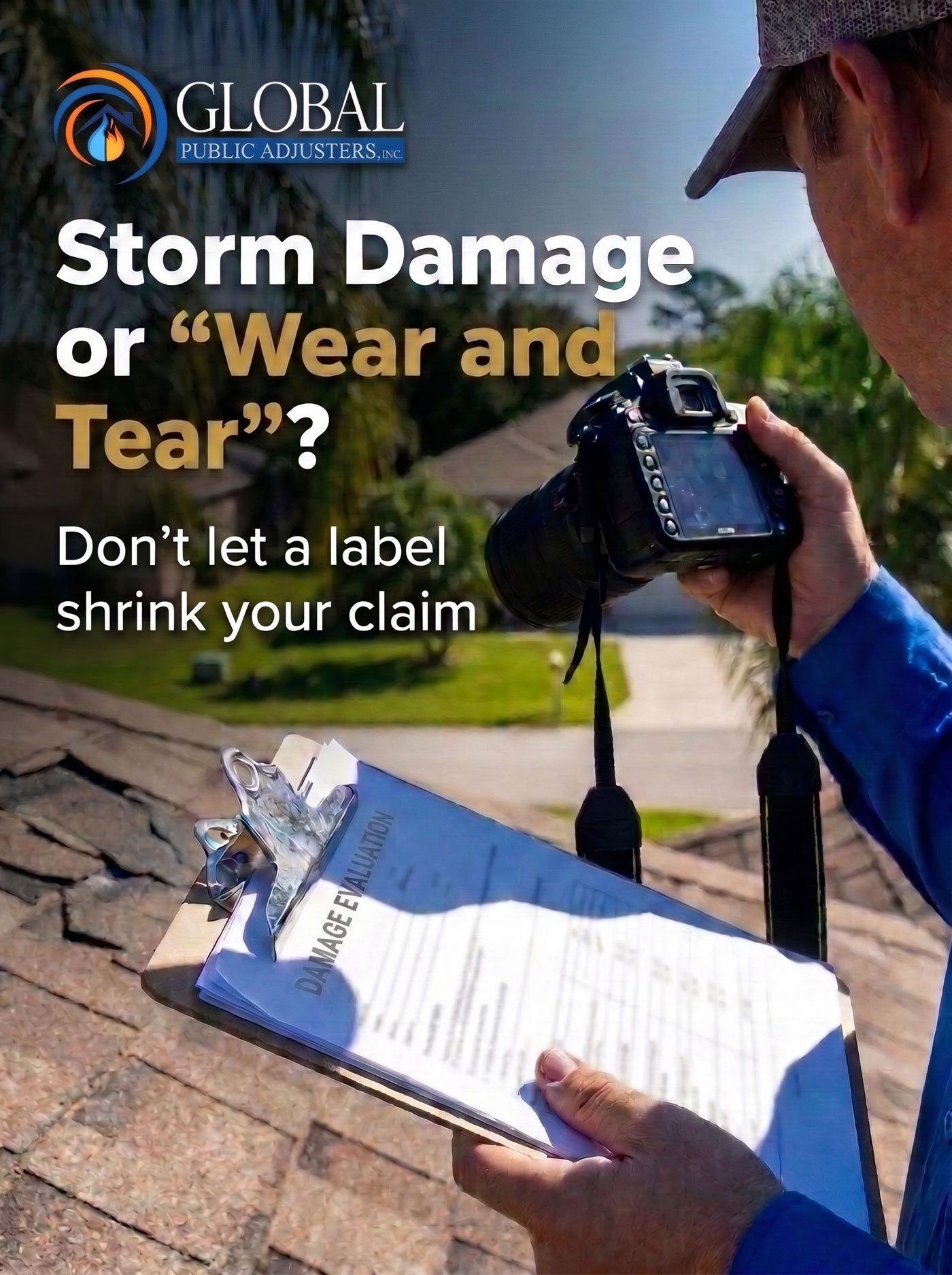
Here’s the reality: an insurance policy can treat sudden storm damage very differently from deterioration or problems that developed over time. A dark ceiling stain proves moisture reached a surface, but it doesn’t say when the water got in or why. Insurers know this, and “wear and tear” becomes a convenient label for denying or shrinking a claim. You shouldn’t have to accept that label just because it arrived on official letterhead. The cause of damage deserves a real investigation, not a quick glance and a form letter.
What You Can Safely Observe and Record
From a safe spot on the ground, look for visible debris, displaced shingles or tiles, damaged gutters, broken branches, and water marks inside the home. Don’t climb onto a wet roof or set up a ladder in the wind. Roof inspections belong to people with the right training and safety equipment.
Take photos or video of what you can see safely, including interior stains, damp walls, and water entry points. If you make temporary repairs to stop further damage, photograph the area before and after, and keep every receipt. Florida’s Department of Financial Services recommends documenting damage with photos or video and keeping records of damaged property and temporary repair costs, and we couldn’t agree more.
The Records That Tell the Real Story
A clear picture of the roof before and after the storm is powerful. Older inspection reports, maintenance records, roof invoices, and dated photographs all provide context the insurer can’t wave away. If a qualified roofer or inspector evaluates the roof, keep the report and ask them to explain exactly what they observed rather than settling for a vague “it’s storm damaged” or “it’s just old.” Specifics win claims. Vague statements lose them.
Protect Your Home Without Losing the Evidence
Protecting your home comes first. If water is getting in, take reasonable steps to limit the damage, like having a qualified contractor install temporary roof protection or moving belongings away from a leak. Don’t delay urgent safety measures waiting for an inspection. Just document conditions as well as you can before and after the temporary work, hold onto itemized receipts, and avoid discarding damaged materials before photographing them when it’s safe and practical to keep them.
We Fight for the Full Story
You shouldn’t have to become a roofing expert or an insurance analyst to be treated fairly. That’s our job. Global Public Adjusters investigates the damage, builds the documentation, and pushes back when an insurer leans on “wear and tear” to pay less than the policy promises. We work for you, not the insurance company, and we know how to make the evidence speak clearly.
If your roof claim is being questioned or denied, contact Global Public Adjusters today for a free claim review.
