Insurance policies are written in a language that seems specifically designed to confuse regular people. One of the biggest distinctions you need to understand—especially if you ever have to file a claim—is the difference between replacement cost and actual cash value.
These two terms sound pretty similar, but they can mean the difference between getting fully covered and being stuck with a huge bill.
What Replacement Cost Actually Means
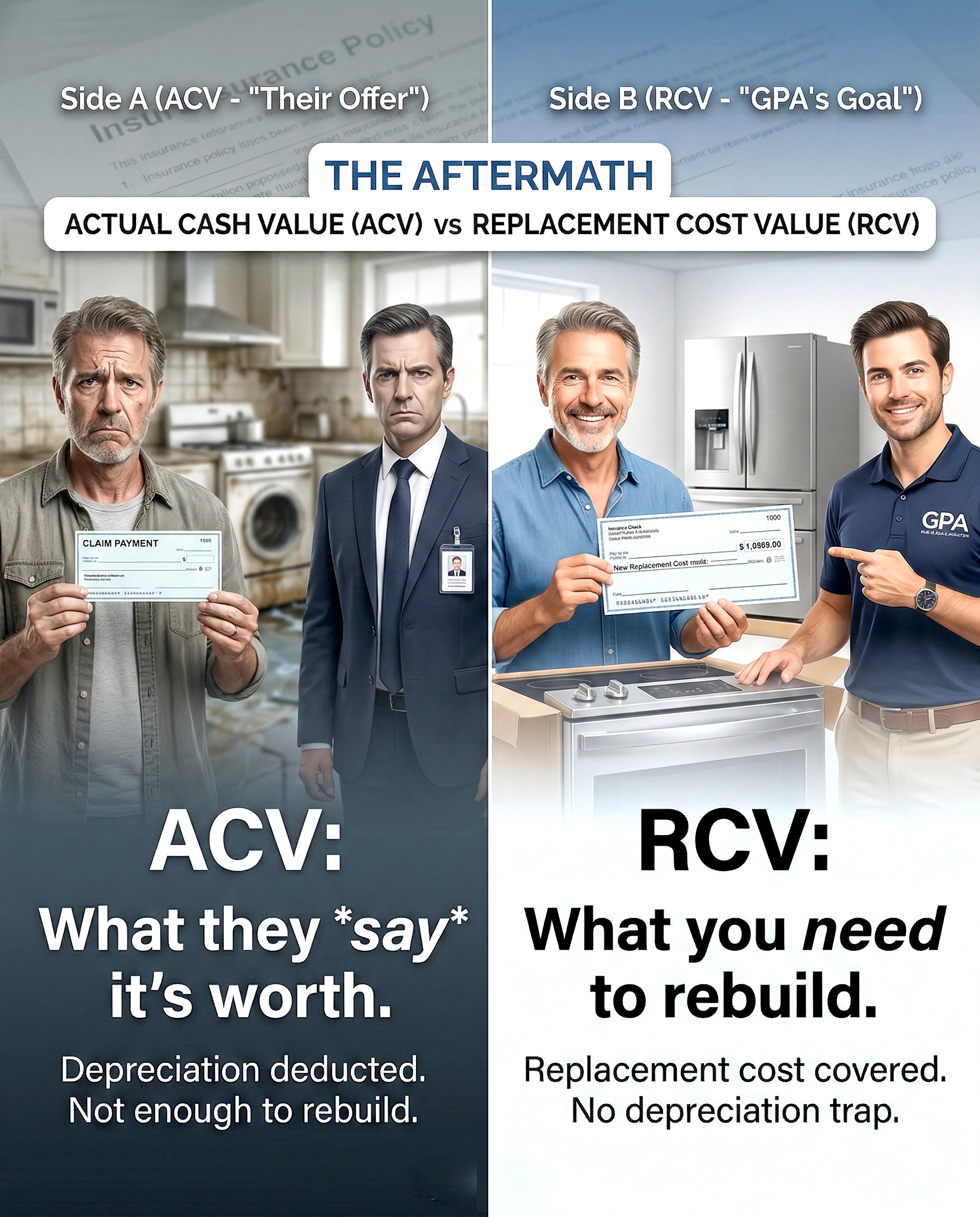
Replacement cost is straightforward: it’s the amount of money it would take to repair or replace your damaged property with new materials of similar quality. No depreciation, no “well, it was 10 years old so we’re only paying you half.”
If your policy includes replacement cost coverage, you’re in much better shape when something goes wrong. It means you can actually replace what was damaged without dipping into your savings to cover the gap.
How Actual Cash Value Works (And Why It’s Less Helpful)
Actual cash value, on the other hand, does factor in depreciation. The insurance company looks at your damaged property and says, “Sure, we’ll pay to replace this… minus whatever we think it depreciated over time.”
So that roof you need to replace after a Florida storm? If it’s 15 years old, they might only pay you a fraction of what a new roof actually costs today. Same with appliances, flooring, furniture—pretty much everything loses value in their eyes.
The problem is, even though your stuff depreciated, replacement costs didn’t. A new roof still costs what a new roof costs, regardless of how old your previous one was.
Why This Matters So Much
A lot of homeowners don’t even know which type of coverage they have until they file a claim. Then they get the settlement offer and realize they’re looking at thousands of dollars in out-of-pocket expenses they weren’t expecting.
In Florida, where property damage from hurricanes, flooding, and severe weather is a real and regular risk, understanding your coverage before disaster strikes is crucial. You don’t want to be figuring this out while you’re standing in a damaged home.
How a Public Adjuster Can Help
This is where a public adjuster comes in. We can review your policy, explain exactly what kind of coverage you have, and help you understand what you’re actually entitled to receive. When you know the rules of the game, you can advocate for yourself much more effectively—or we can advocate for you.
Filing a property damage claim in Florida and confused about your coverage? Contact Global Public Adjusters to learn more about how we can help you maximize your settlement and navigate the claims process.