
Mold Claims in Miami Condos and Apartments and How to Get Insurers to Pay
When the mold is real but the insurer calls it a maintenance issue, you have more power than you think
If you live in a Miami condo or apartment long enough, you’ll probably meet mold. The city’s humidity, aging HVAC systems, and shared wall construction create perfect conditions for it to spread quickly and quietly, and many families discover it only after a persistent musty odor or dark spots creeping across a wall. That discovery is stressful enough. But here’s where it often gets worse. When residents turn to their insurance company for help, they run into denials, delays, or underpaid claims, with the mold labeled a maintenance issue even when the real cause was sudden water intrusion from a leak, a storm, or a failed AC system. If that’s happened to you, listen closely, because that label is an argument, not a verdict, and arguments can be beaten.
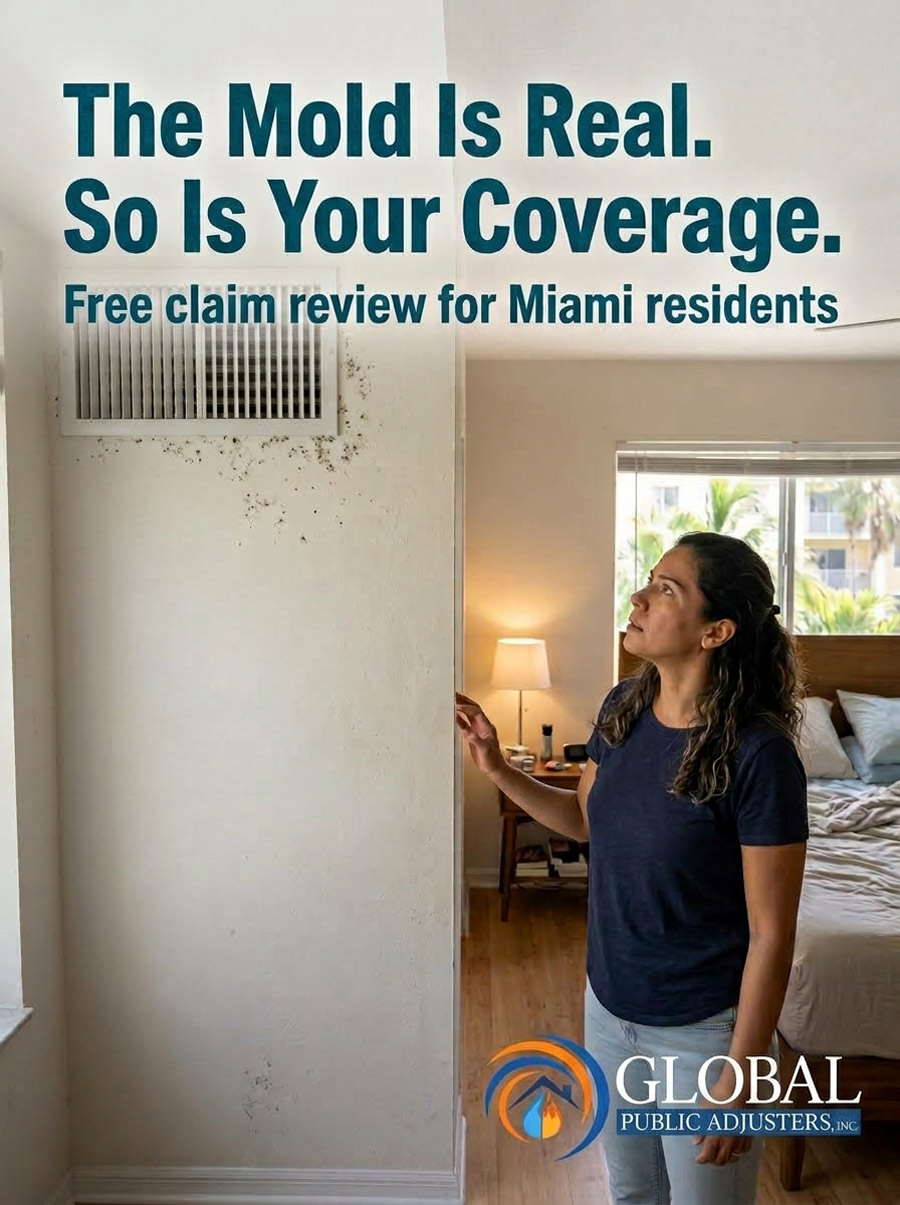
Why Mold Thrives in Miami Multi-Family Buildings
Miami’s climate puts constant pressure on buildings, and moisture builds in places residents can’t see, especially behind walls and inside shared systems:
- Shared wall moisture that travels between units after leaks or storms, feeding mold growth in apartments far from the original problem
- AC condensation problems in aging systems and clogged drain lines that create damp conditions inside closets, hallways, and ceiling spaces
Plumbing stacks serving whole vertical runs of units and roof leaks that wander before they show add more pathways. This is exactly why mold in multi-family buildings is so hard to control with surface cleaning alone. The moisture source is often in a wall you share, a system you don’t own, or a unit you’ve never entered, and until it’s found, the mold keeps coming back.
The Signs Residents Notice First
Mold introduces itself gradually. Dark spots on drywall that expand over time, usually starting in corners, closets, and around AC vents. Musty odors that linger no matter how thoroughly you clean, which means the growth lives deeper than any sponge can reach. Condensation on vents and windows, bubbling paint, and allergy symptoms that ease whenever you leave home round out the picture. Every one of these signs points to a deeper moisture problem, and documenting them early, with dated photos, matters more than most residents realize. That timeline becomes gold when the claim gets filed.
Why Mold Claims Get Denied and How to Fight Back
Now for the heart of it. Insurers deny Miami mold claims with the same playbook over and over. They call it a maintenance issue. They suggest the resident didn’t clean properly. They argue the mold developed gradually over months, which conveniently pushes it outside coverage for sudden events. It leaves families feeling dismissed at exactly the moment they need help, and it works because most residents don’t know how to prove otherwise. Here’s the counterpunch. Coverage usually turns on the cause of the moisture, not the mold itself. When you can show the mold traces back to a sudden pipe failure, storm intrusion, or an AC system breakdown, the maintenance argument starts collapsing. That proof takes moisture readings, inspection reports, a documented timeline, and someone who knows how to assemble it all, which is exactly where we come in.
How Global Public Adjusters Stands With Miami Residents
Our public adjusters work exclusively for policyholders, never for insurance companies, and mold claims are some of the most satisfying fights we take on. We trace the moisture to its true source, document the connection between that source and the mold with professional evidence, and present the claim so the sudden-cause story is backed by proof instead of frustration. Then we negotiate directly with the insurer, pushing for the coverage your policy actually provides. Families worry about their health, their children’s breathing, and their belongings when mold moves in. The claim shouldn’t be one more thing to worry about, and with the right advocate, it isn’t.
Is there mold in your Miami condo or apartment and an insurer that won’t step up? Contact Global Public Adjusters today for a free claim review, and let’s prove what really caused it together.
