
How Public Adjusters Document Roof Damage After a Florida Storm
After a major storm moves through Florida, the calls start coming in fast. Wind-lifted shingles, damaged flashing, leaks that appear days later — roof damage is one of the most common and most disputed insurance claims in the state.
Insurance companies have their own inspectors, their own preferred methods, and their own reasons to minimize what they pay. Public adjusters know how to push back.
Why roof claims are especially contested
Insurers frequently argue that storm damage is actually wear and tear, that missing shingles were already loose, or that any openings in the roof existed before the storm. These arguments are difficult to counter without detailed, professional documentation gathered shortly after the event.
A homeowner walking around with a phone camera is rarely going to capture what an experienced adjuster can. The difference in what gets documented — and how — can significantly affect the outcome of a claim.
How adjusters build a roof claim from the ground up
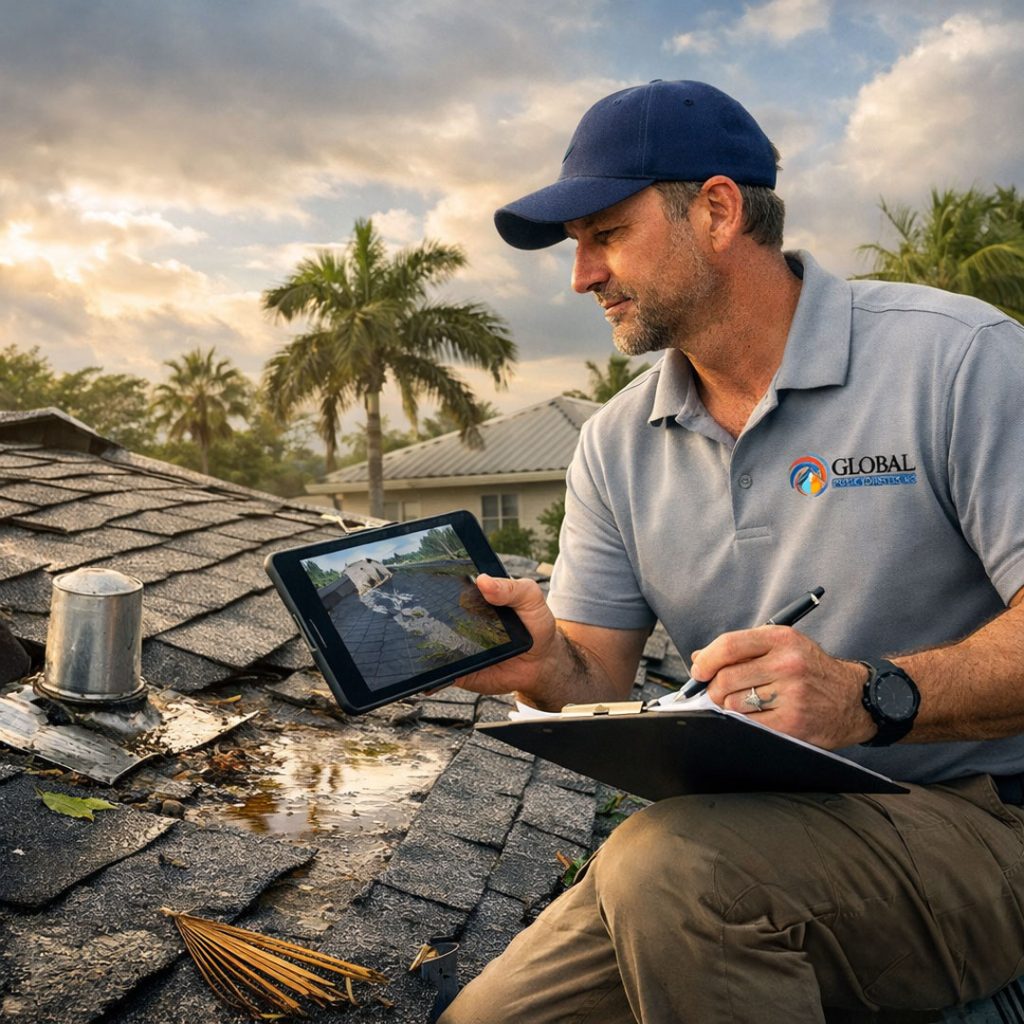
Strong roof claims don’t rely on a few photos and a general description. Public adjusters approach storm damage systematically, gathering evidence that directly addresses the arguments insurers are likely to make. That typically includes:
- High-resolution photography of every area of damage, including close-up detail of shingle condition, fastener failure, and lifted edges
- Drone footage that captures the full scope of damage and the surrounding roof surface
- Shingle uplift measurements that demonstrate wind vulnerability
- Moisture readings in the roof decking to identify water intrusion below the surface
- Wind-pattern analysis tied to local weather data from the storm event
What insurers are actually looking for
Understanding what an insurer needs to approve a claim helps adjusters build documentation that directly addresses those requirements. For roof damage, insurers typically look for proof of:
- Storm-created openings that allowed water to enter the structure
- Wind-driven rain or debris impact as the cause of damage
- Structural compromise that goes beyond surface-level cosmetic issues
- Loss of the roof’s ability to function as a waterproof barrier
When documentation addresses each of these points directly, it becomes much harder for an insurer to deny or underpay a legitimate claim.
Speed matters after a storm
Florida storms don’t wait, and neither does water damage. Moisture that enters through a damaged roof can spread quickly through insulation, framing, and interior surfaces. The longer documentation is delayed, the easier it becomes for an insurer to argue that secondary damage was caused by something other than the storm.
Getting a public adjuster involved early — ideally before any repairs begin — preserves the integrity of the evidence and puts the homeowner in the strongest possible position when the claim is reviewed.
Dealing with roof damage after a Florida storm? Global Public Adjusters can document your claim the right way from the start. Contact us today or visit globaladjustersfla.com to learn how we help homeowners recover what they’re owed.
