
How Adjusters Determine the Scope of Fire and Smoke Damage
Identifying Hidden Hazards and Maximizing Your Claim
A house fire is one of the most disorienting experiences a homeowner can go through. Even after the flames are out and the smoke clears, the damage is far from over — and far from fully visible. Walls that look intact may be hiding soot. Your HVAC system may have distributed smoke particles to every room in the house. The smell that seems like it should fade with time has embedded itself into insulation and flooring you can’t even see.
This is why the scope assessment — the process of documenting exactly what the fire damaged and how — is so critical to a fair insurance claim. And it’s why public adjusters approach it the way they do: methodically, room by room, system by system, with tools and expertise that go well beyond a visual walkthrough.
It Starts on the Outside
Before stepping through the front door, a thorough adjuster examines the exterior. Burn patterns on siding or roofing materials can tell a detailed story about the fire’s origin, path, and intensity. Warped window frames and doors that no longer close properly may indicate structural shifting from heat exposure. Charring on structural elements — even partially — can affect the integrity of the entire frame.
This exterior assessment isn’t just about documenting cosmetic damage. It’s about understanding how the fire moved through the structure, which shapes every inspection that follows.
Room by Room on the Inside
Inside the home, the inspection becomes more granular. Every room gets evaluated, not just the ones closest to the fire’s origin. Smoke doesn’t respect boundaries — it travels through gaps, vents, and air pressure differentials to reach spaces that might look completely untouched.
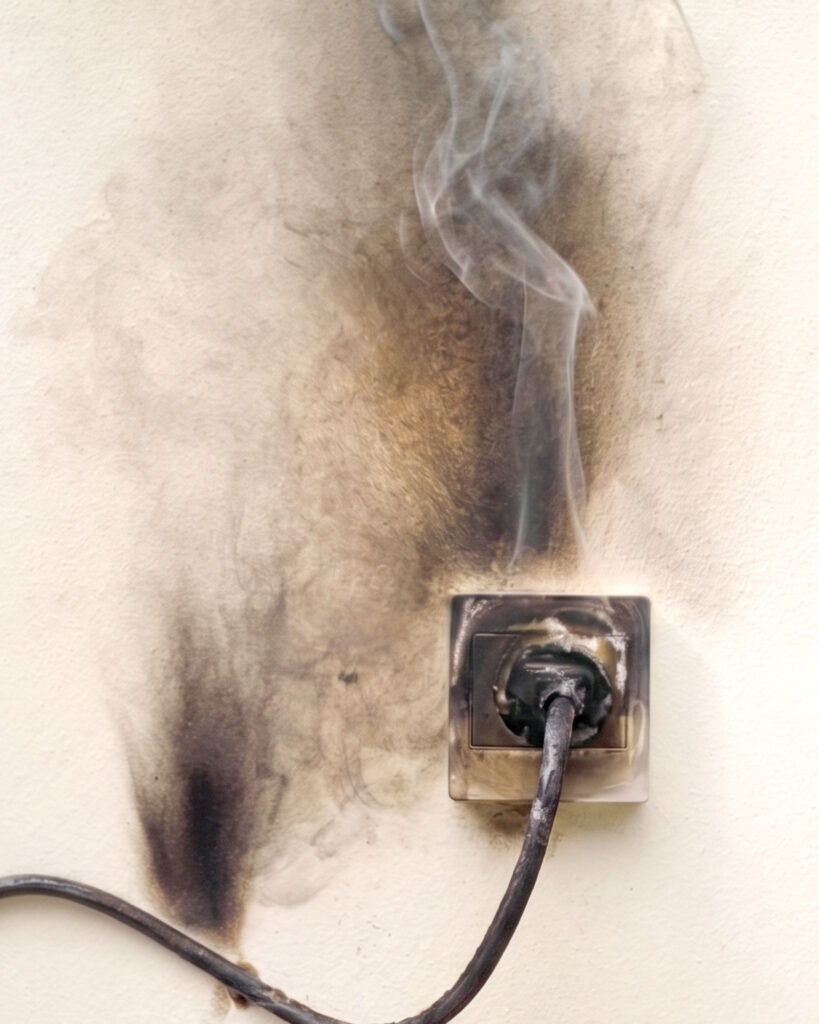
Adjusters look for soot deposits on walls, ceilings, and inside closets. They check insulation for smoke staining that signals deeper contamination. They examine electrical wiring for heat damage, which may not be visible but can create serious safety hazards. Melted fixtures, discolored plastics, and warped cabinetry all get documented as part of the broader loss picture.
Rooms that appear undamaged often aren’t — and an adjuster who skips them is leaving money on the table for the insurance company, not the homeowner.
Tracing the Smoke You Can’t See
One of the most important — and most overlooked — parts of a fire damage assessment is tracing smoke and odor into areas that aren’t immediately visible. Smoke travels through:
- Air ducts and return vents
- Attic spaces and wall cavities
- Subflooring and insulation layers
- Gaps around plumbing and electrical penetrations
To locate these hidden reservoirs, experienced adjusters use thermal imaging cameras, moisture meters, and sometimes borescopes — small cameras that can look inside walls and cavities without destructive opening. This step matters enormously for the final claim, because odor remediation and hidden smoke damage are often where insurance companies push back hardest. Documentation with actual readings and images is what makes those line items stick.
The HVAC System Deserves Its Own Inspection
Many homeowners don’t realize that their heating and cooling system can become a vehicle for distributing smoke damage throughout the entire house. When a fire occurs and the HVAC is running — or even when it’s not, depending on air pressure — contaminated air gets pulled through ductwork and deposited in every connected space.
Adjusters document contaminated ducts, soot-clogged filters, and particulate buildup inside vents. This documentation is essential for securing coverage for professional duct cleaning or, in more severe cases, full system replacement. Without it, insurers may deny or minimize those costs entirely.
Contents Are Part of the Loss Too
The structure of the home is only part of what a fire damages. Furniture, clothing, electronics, appliances, art, and personal belongings all need to be evaluated individually. Adjusters inspect contents for soot penetration, heat exposure, and odor absorption — all of which can render items unsalvageable even if they look superficially intact.
A detailed contents inventory, with condition notes and replacement values, is one of the most time-consuming parts of the process — and one of the most valuable. Contents claims can represent a significant portion of the total loss, and vague or incomplete documentation almost always results in underpayment.
Pulling It All Together
The final claim package that a public adjuster assembles brings every piece of this work together: photographs and video documentation, thermal and moisture readings, expert reports, contractor repair estimates, and a full contents inventory. The goal is to make the case so complete and so well-documented that the insurer has no reasonable basis for disputing what’s owed.
Fire damage claims are among the most complex in the industry. The difference between a fair settlement and a deeply inadequate one often comes down to how thoroughly the damage was documented in the first place. Global Public Adjusters exists to make sure nothing gets missed — and nothing gets left underpaid.
Is There Hidden Damage Lurking in Your Walls? Smoke and soot don’t stay in one place—and neither should your inspection. Ensure your settlement covers the full scope of your loss, including the damage you can’t see.
