
A Step-by-Step Guide to Storm Damage Insurance Claims for Florida Homeowners
From the first photos to the final decision, a clear process helps homeowners stay organized after a storm
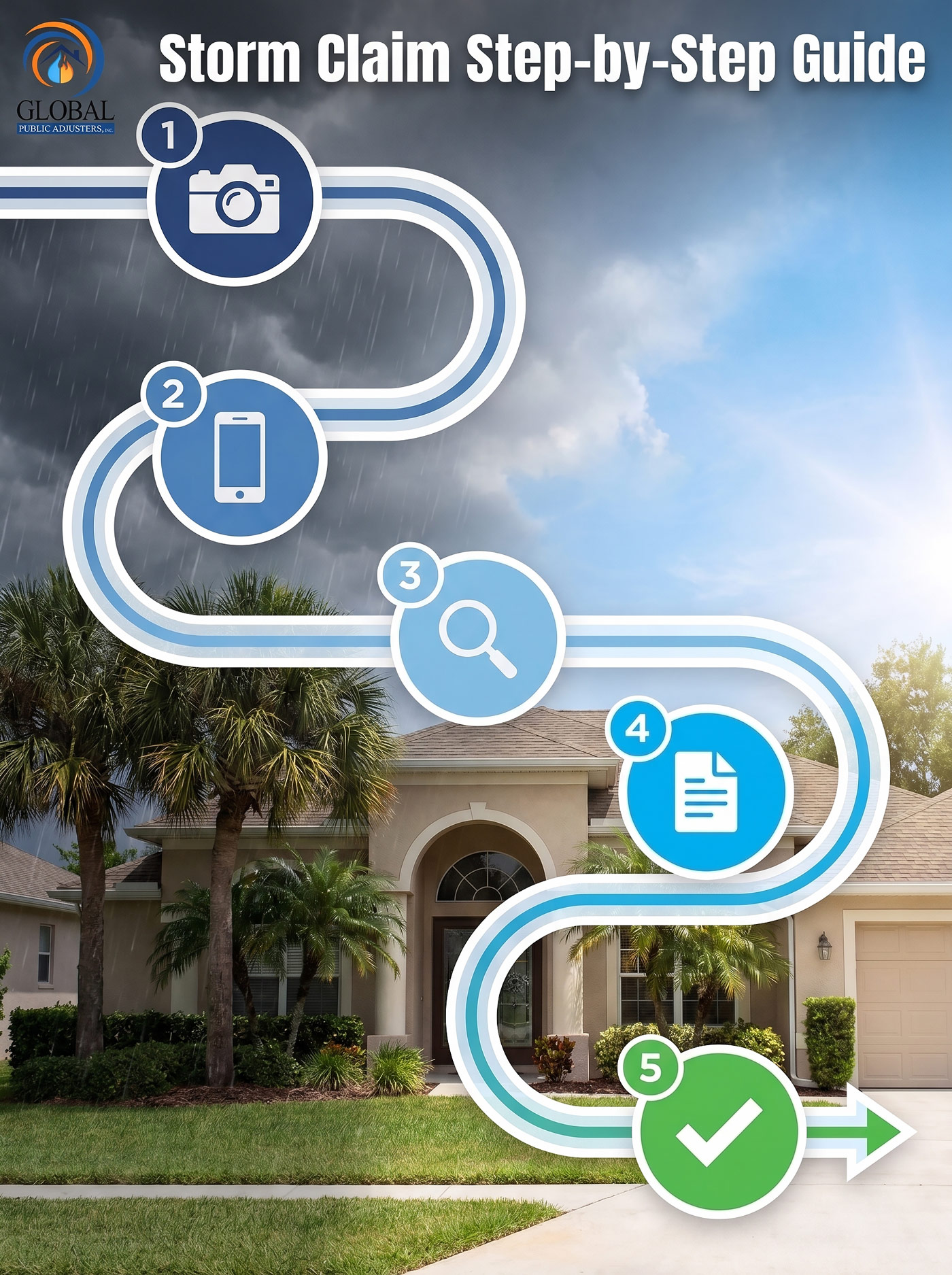
A storm claim can feel like a second full-time job that arrives exactly when you’re busiest, trying to put your home back together. The encouraging truth is that the process rewards organization more than anything else, and the steps are learnable. Here’s the walkthrough we wish every Florida homeowner had taped to the fridge before the season starts, from the first photos to the settlement decision.
Start With Safety, Then Prevent Further Damage
People come first, always. Stay away from downed power lines, unstable structures, standing water near electrical equipment, and damaged roofs, and wait for safe access before entering a seriously damaged building. Once it’s safe, take reasonable steps to prevent additional damage, like arranging emergency tarping or addressing an active leak through qualified professionals, and keep the receipts and photos of that emergency work. Temporary protection and permanent repairs are different tasks, and your policy likely includes specific duties for preventing further loss. What it never requires is climbing onto a roof or into a damaged attic yourself.
Document the Damage and Report the Loss
Before cleanup or repairs, when it’s safe and practical, build the record:
- Photos and video of affected rooms, ceilings, flooring, windows, exterior walls, roof areas visible from the ground, fencing, and personal property, in wide views and close-ups
- A basic list of damaged belongings with approximate age, purchase details when available, and condition, keeping pre-storm photos if you have them
Don’t throw away damaged items before documenting them unless safety or sanitation demands it. Then report the loss promptly using the method your policy describes, ask what forms are needed, and record the claim number, the names of the people you speak with, and every promised follow-up. One folder, everything in it. That single habit carries more claims than any other.
Understand the Inspection
The insurer may arrange an inspection to evaluate the damage, and your job is simply to be ready. Explain what happened, point out the affected areas, and share your photographs and documents. If safe access or additional testing is needed, ask how it’ll be handled, and remember that an inspection is one step in the process, not the verdict, because not every issue shows itself on the first visit. This is also where we should explain our own role plainly. A public adjuster represents the policyholder, never the insurance company, in evaluating and documenting a covered loss and communicating about the claim. If you work with one, verify the license, understand the written contract and fee, and ask exactly what’s included. A public adjuster isn’t an attorney, contractor, or engineer. Each professional has a different job, and anyone promising you a specific settlement number is someone to walk away from.
Review the Estimate and Track What Follows
When the estimate or decision arrives, review the scope of work, measurements, materials, and listed exclusions, and compare it against the damage you documented. If a room, item, or repair step appears to be missing, ask for a written explanation and provide your supporting evidence. The initial offer can change as more information arrives, though additional payment is never guaranteed, because coverage always depends on the policy and the proof. As repairs progress, keep the invoices, work orders, and photos coming, and if hidden damage appears once materials come out, document it and notify the insurer per your policy. Before accepting a settlement or signing a release, make sure you know whether it resolves all of the claim or only part of it.
A More Organized Recovery
A clear record, timely communication, careful review, and safe mitigation turn a chaotic process into a manageable one. Keep copies of everything, ask questions whenever the next step is unclear, and don’t carry it alone when the claim gets complicated. That’s precisely what we’re here for. Global Public Adjusters helps Florida policyholders document property damage and navigate claims from the first photo to the final decision, including for homeowners in Pensacola and across the Panhandle recovering from Hurricane Isaias right now.
Working through a storm damage claim and want an advocate in your corner? Contact Global Public Adjusters today for a free claim review, and let’s get your recovery organized.
