
A Homeowner’s Guide to Sinkhole Damage Claims in Florida
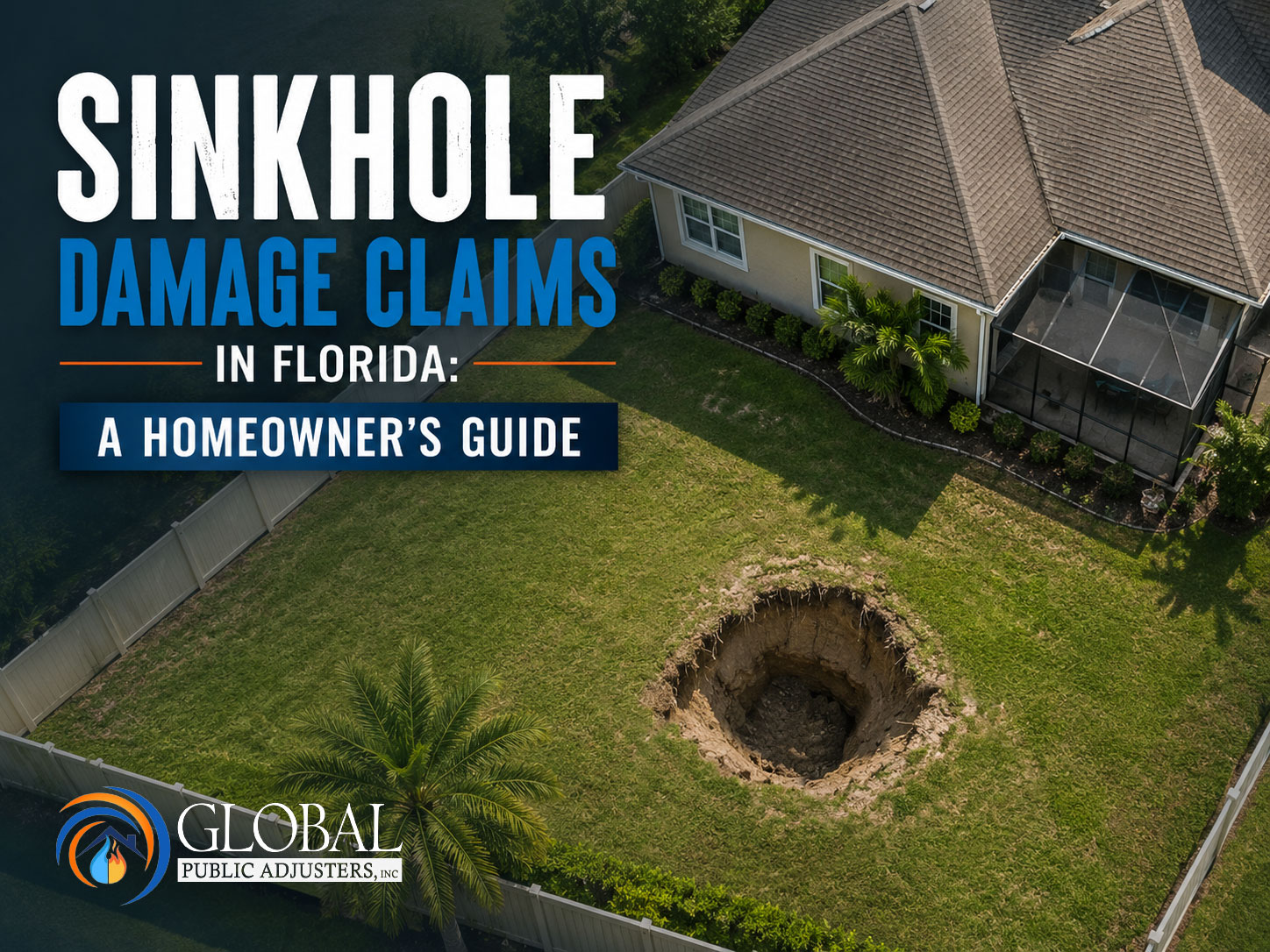
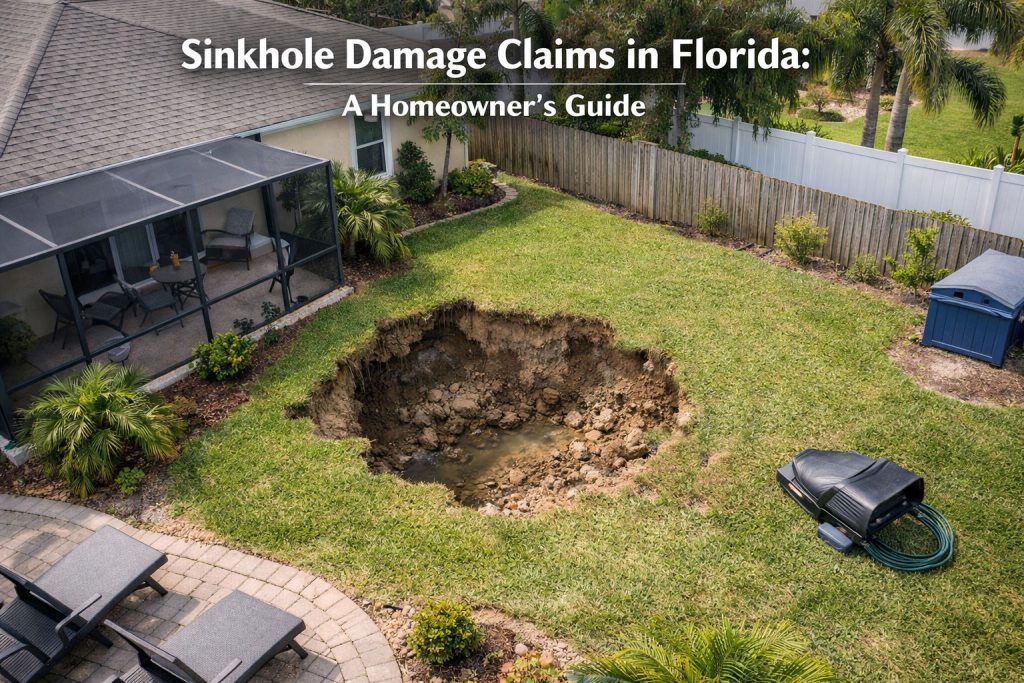
Sinkholes are really one of those risks that feel almost uniquely Floridian. Much of the state sits on limestone bedrock and over periods of time, water moving underground can slowly dissolves the limestone sediments away. And when enough of that material disappears below the surface, the ground above can shift or in the worst cases, collapse entirely and create a sinkhole!
For homeowners, the damage ranges from basic cosmetic cracks to true catastrophic structural failure. And filing an insurance claim for that damage is one of the most complicated processes in all of property insurance. Policies use precise language, investigations require specialized testing, and insurers have every incentive to classify damage in the way that costs them the least. Understanding how the process works is the first step toward protecting your home and your claim!
Warning Signs Every Florida Homeowner Should Know
Sinkhole activity rarely announces itself all at once. It usually starts with subtle changes around the home that are easy to dismiss or blame on normal settling. Watch for:
- Cracks appearing in interior walls, floors, or exterior stucco, especially stair step cracking along block walls
- Doors and windows that suddenly stick or will not close properly
- Depressions or soft spots forming in the yard
- Gaps opening between walls, floors, or ceilings
- Sloping or uneven floors that were level before
Not every crack means sinkhole activity. Homes settle, and some movement is normal. But patterns matter. Stair step cracks, widening gaps, and multiple symptoms appearing together often point to something happening below the foundation, and those signs deserve attention rather than a coat of spackle.
Timing matters too. Documenting these signs early, with dated photos and notes, builds a record of progression that can become valuable evidence later. Waiting until damage is severe makes both the repairs and the claim more difficult.
How the Investigation Actually Works
Here is where sinkhole claims separate themselves from ordinary property claims. Insurance companies require geological testing before they will approve sinkhole coverage. That testing typically involves soil borings, ground penetrating radar, and engineering evaluations designed to determine what is happening beneath the home.
Most homeowners have never seen an engineering report in their lives, let alone reviewed one for accuracy. They do not know what tests should be performed, how thorough the investigation should be, or whether the conclusions actually match the data. That knowledge gap puts homeowners at a real disadvantage, because the classification the insurer assigns to the damage determines what the policy pays.
Whether damage gets labeled as sinkhole activity, catastrophic ground collapse, or ordinary settlement can mean the difference between full structural repairs and a denied claim.
Where a Public Adjuster Changes the Equation
This is exactly the situation public adjusters exist for. Global Public Adjusters works on behalf of the homeowner, not the insurance company, and that distinction shapes everything about how the claim unfolds.
Global pushes the insurer to perform a genuinely thorough investigation instead of a minimal assessment. Their team reviews the engineering reports, questions incomplete findings, and challenges conclusions that do not line up with the evidence. When an insurer tries to wave off serious foundation movement as routine settlement, having an experienced advocate who can push back with documentation makes all the difference.
What a Sinkhole Claim May Cover
Once sinkhole activity is confirmed, the claim becomes about securing everything the policy owes. Depending on the situation, that can include structural repairs, foundation stabilization such as grouting or underpinning, cosmetic restoration inside and outside the home, and temporary housing if the property becomes unsafe to occupy during repairs.
These are often large claims, and insurers know it. Cost saving pressure shows up in lowball repair estimates, narrow damage classifications, and stabilization plans that address symptoms rather than causes. A grouting plan that stops short of what the engineering actually calls for might look fine on paper and leave the home vulnerable to future movement. Global advocates for full and fair compensation so families have the resources to actually restore the safety and stability of their home, not just patch it.
Do Not Face a Sinkhole Claim Alone
If you are seeing warning signs around your home or your insurer has already pushed back on a sinkhole claim, get an advocate in your corner early. Global Public Adjusters knows how these investigations work, what the reports should say, and how to hold insurers to their obligations. Contact Global for a review of your situation before you accept the insurance company’s version of events.
