
Why Insurers Downplay Roof Deck Damage After Strong Wind Events
The shingles look fine, the decking underneath doesn’t, and the insurer is counting on you not knowing the difference
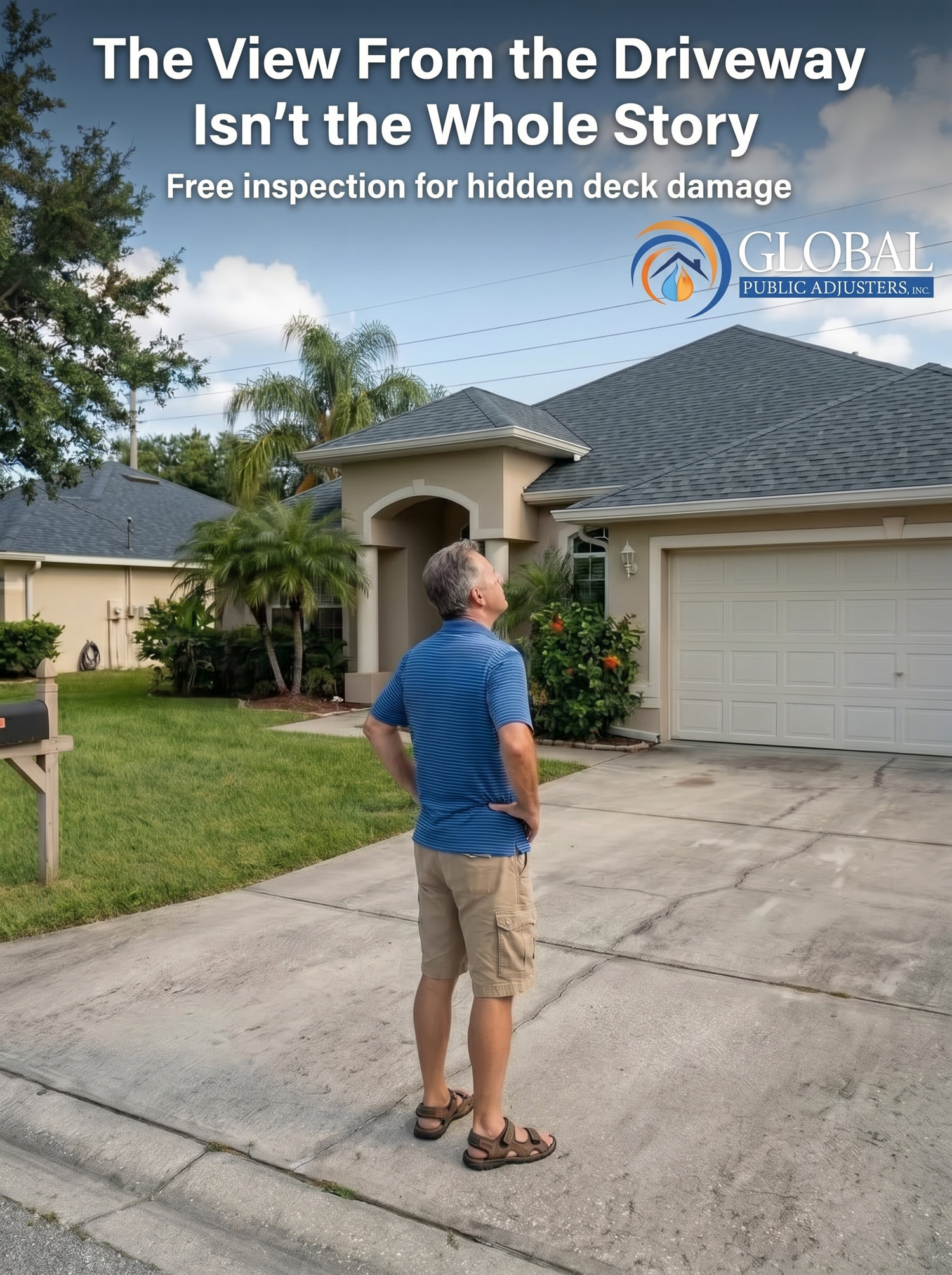
Here’s a pattern Florida homeowners know too well. A strong wind event rolls through, you check your roof from the driveway, and everything looks normal. No missing shingles, no visible damage. Then weeks later, the ceiling stains appear. The attic smells damp. The roof decking starts to warp. You file a claim, and the insurer’s response lands like a door closing. The damage is cosmetic, or pre-existing, or unrelated to the storm. Roof deck damage is one of the most downplayed types of loss in Florida claims, and there’s a simple reason for it. Deck repairs are expensive, and every claim that gets reclassified as cosmetic or old is money the carrier keeps. Let’s talk about how this happens and, more importantly, how homeowners beat it.
How Wind Reaches the Deck Without Tearing Off Shingles
Wind doesn’t need to strip a roof bare to compromise it. It works quietly, and the deck pays the price:
- Lifted shingles that break their adhesive seals in the gusts, then settle back down looking completely normal from the ground while letting water seep beneath with every rain
- Warped roof decking caused by moisture entering through those tiny openings, soaking into the wood panels that hold your entire roof system up
Once moisture reaches the deck, the damage compounds. Wood swells, fasteners loosen, sagging begins, and the attic below starts collecting the evidence. By the time interior symptoms appear, the deck may have been absorbing water for weeks, and that delay is exactly what insurers use against you.
The Downplay Playbook
When deck damage shows up in a claim, carriers reach for familiar arguments. The warping is cosmetic and doesn’t affect function. The deck deteriorated from age and Florida humidity, not the storm. The damage existed before the wind event. Each argument serves the same purpose, shrinking an expensive structural repair into a small payout or none at all. And each one leans on the same weakness, which is that the homeowner can’t easily see or explain what happened between the shingles and the attic. That gap between what you can see and what you can prove is where these claims go to die. Unless you close it.
How Homeowners Build the Winning Case
Families who overturn these classifications gather evidence that connects the storm to the deck, and the playbook works. Attic photos and moisture readings taken as soon as symptoms appear establish the timeline, showing intrusion that began after the wind event rather than gradual seepage. Professional roof inspection reports carry the most weight, because an expert on the roof can document broken shingle seals, exposed underlayment, and moisture pathways with close-up photos instead of driveway guesses. Weather records tying the damage window to documented wind speeds complete the picture. Piece by piece, the cosmetic and pre-existing arguments lose their footing, because dated evidence beats convenient labels every time.
How Global Public Adjusters Levels the Field
This fight is exactly what we’re built for. Our public adjusters work only for policyholders, and we know every move in the downplay playbook, which means we know how to counter each one. We inspect the roof and the attic ourselves, document the deck damage and its cause with professional evidence, and present a claim the insurer can’t wave off as cosmetic. Then we negotiate until the settlement covers the real repair, structural decking and all, not just a few shingles. Your roof deck holds up everything above your family’s heads. The claim that repairs it deserves to be taken seriously, and we make sure it is.
Did your insurer downplay roof deck damage after a wind event? Don’t settle for the cosmetic label. Contact Global Public Adjusters today for a free inspection, and let’s get your claim the full assessment it deserved from the start.
