
ALE Coverage Explained – You may be owed more than just repair money
How Florida Families Get Housing and Living Costs Paid After a Major Loss – Here is the coverage displaced
When a storm, fire, or major water loss makes a home unlivable, Florida families face two crises at once. The damage itself, and the sudden question of where to live while repairs drag on. Here is what too many homeowners do not realize until they are standing in a hotel lobby with their kids and a suitcase. Your insurance policy very likely includes coverage designed for exactly this moment. It is called Additional Living Expenses, or ALE, and it can pay for your temporary housing and the extra costs of daily life during displacement. Understanding ALE before you need it, or right now if you need it today, can be the difference between months of financial strain and a manageable recovery. Let’s make sure you know what you are owed.
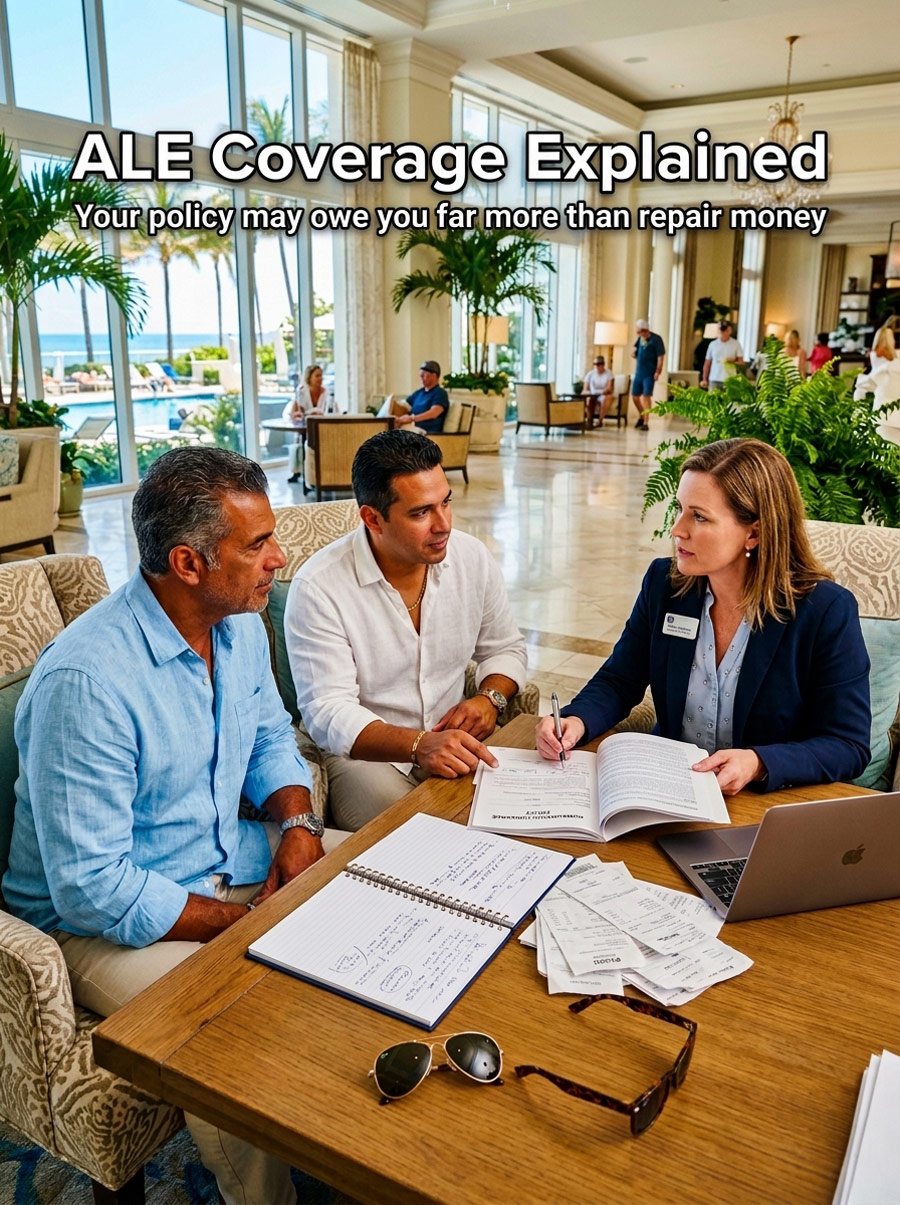
What ALE Typically Covers
ALE exists to keep your family’s living conditions as close to normal as possible while your home is being repaired. The coverage generally reaches further than people expect:
- Temporary housing costs, including hotels, short-term rentals, and furnished apartments comparable to your normal living situation
- The extra daily living expenses displacement creates, such as increased meal costs, additional transportation and mileage, laundry services, and even pet boarding in many policies
Notice the key word: additional. ALE covers the difference between your normal cost of living and what displacement forces you to spend. If your family typically spends a certain amount on groceries but now eats restaurant meals because your hotel has no kitchen, that difference is exactly what this coverage is for. These benefits keep families safe, housed, and stable during one of the most disruptive experiences a household can face.
How to Use ALE the Right Way
Families who get the most from their ALE coverage follow a simple discipline from day one. They save every receipt, because hotels, meals, gas, laundry, storage, and boarding all add up fast, and reimbursement depends on documentation. A shoebox or a phone folder of receipts becomes genuinely valuable. They also request written guidance from their insurer about what is covered, daily or monthly limits, and how long benefits last, since verbal assurances have a way of evaporating when the reimbursement check gets calculated. Keeping a simple log of displacement-related expenses alongside the receipts creates a clean record that prevents delays and disputes. It takes minutes a day and protects thousands of dollars.
Where Families Get Shortchanged
Now for the part the insurance company will not volunteer. ALE claims get underpaid all the time. Carriers may push families toward cheaper accommodations than their policy entitles them to, dispute meal and mileage costs, or pressure households to move home before repairs are truly complete, cutting benefits off early. Displacement is emotionally draining enough. Families are unsettled, worried about their home, and unsure how long they will live out of suitcases. Nobody in that position should also have to fight line by line for coverage they already paid for. And here is the empowering truth: you do not have to.
How Global Public Adjusters Stands With Displaced Families
This is where we come in, and it is some of the most meaningful work we do. Our public adjusters work exclusively for policyholders, and we know ALE coverage inside and out. We help families understand exactly what their policy provides, document expenses the right way, and push back when insurers lowball housing allowances or cut benefits short. We also manage the main damage claim at the same time, because faster, fuller repair settlements mean shorter displacements. Your family deserves to recover in stability, not scramble in uncertainty.
