
Mold Claim Denied After a Florida Storm? Here Is How Homeowners Push Back
Why carriers reject storm related mold claims across Miami, Fort Lauderdale, Tampa, and Orlando, and what actually changes the outcome.
Water gets in on a Tuesday. By Friday there is a dark bloom spreading behind the baseboard, and by the following week the whole room smells like a basement. In Florida’s heat and humidity, mold does not wait. It can establish itself in twenty four to forty eight hours, which means the gap between a storm and a mold problem is often shorter than the gap between filing a claim and hearing back about it.
Then the denial letter arrives, and it says the words that stop homeowners cold: maintenance related, long term seepage, excluded under policy.
That letter is not necessarily the end of the conversation.
Why Carriers Deny Mold Claims
Florida policies typically treat mold as a limited peril rather than a covered loss in its own right. Coverage usually depends on whether the mold resulted from a sudden, accidental, covered event. That single word, sudden, is where most denials live.
Common denial reasons include:
- Classification as gradual damage, wear and tear, or a maintenance issue rather than storm related water intrusion
- Late reporting, with the carrier arguing the homeowner allowed the condition to worsen
- A mold sublimit that caps coverage at a fraction of the actual remediation cost
- A finding that the water source was excluded, such as groundwater, flooding, or long term humidity rather than wind driven rain
Notice that most of these are conclusions about the cause and timeline. Conclusions can be challenged with better evidence.
What Actually Moves the Needle
Reversing a mold denial is usually a documentation problem, not an argument problem. The homeowners who succeed are the ones who can draw a clean line from a specific weather event to a specific point of water entry to the mold that followed.
Evidence that carries real weight includes:
- Dated photographs and video of the affected areas taken as early as possible, ideally before any cleanup
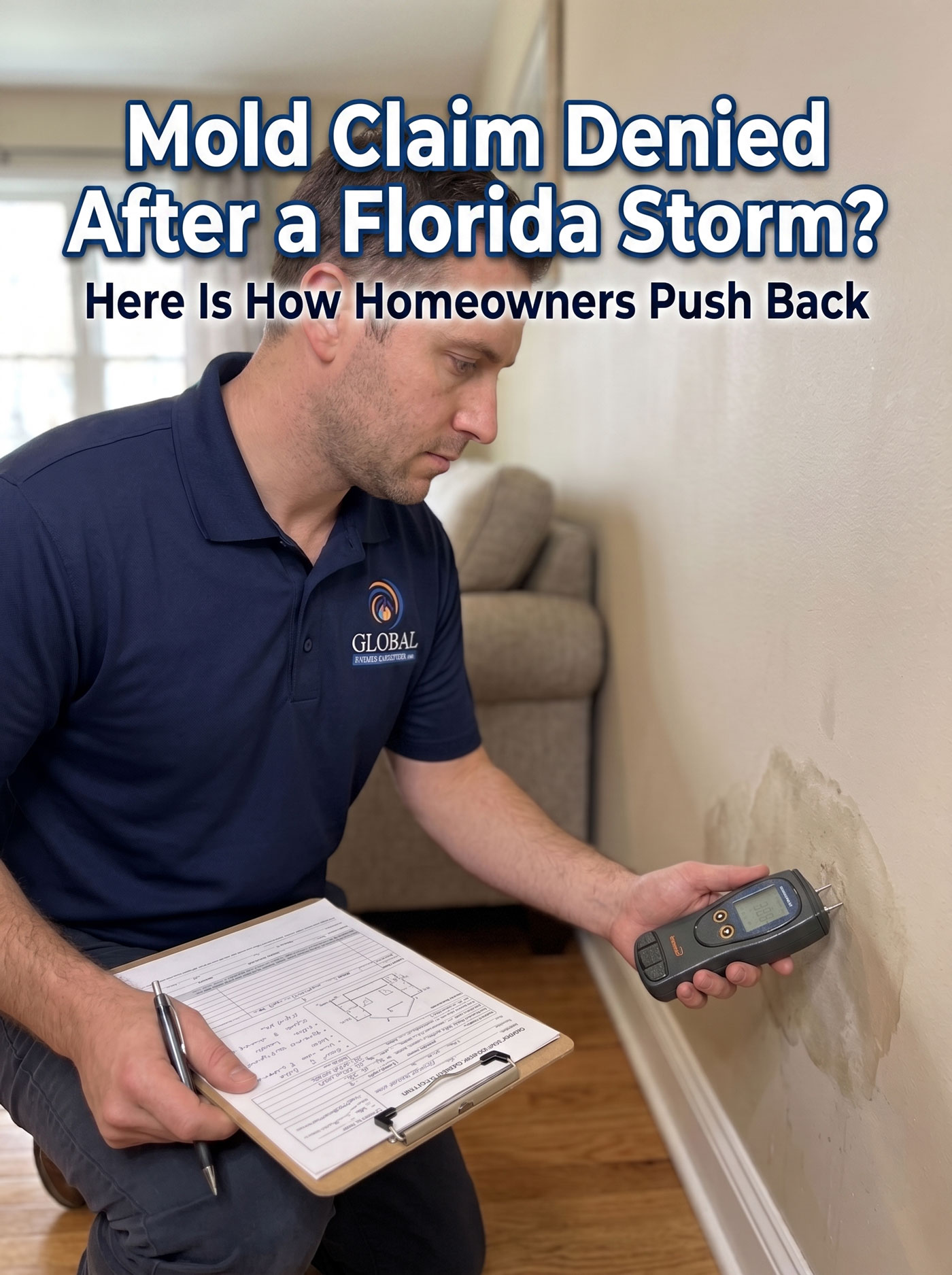
- Moisture meter and thermal imaging readings from a licensed restoration or environmental professional
- An independent mold assessment identifying species, affected square footage, and probable moisture source
- Weather data confirming wind speeds, rainfall, or a named storm on the date of loss at your address
- Roof, window, or plumbing inspection reports establishing the point of entry
- Repair invoices and remediation protocols showing scope and cost
A written mold assessment from a qualified Florida assessor tends to be the strongest single document, because it puts a credentialed opinion on causation into the file.
Timing Matters More in Florida Than Almost Anywhere
Because mold grows so quickly here, carriers frequently argue that visible growth proves the moisture had been present for months. In reality, a Miami or Fort Lauderdale property can go from dry to actively growing in less than a week. Establishing the actual timeline, with dates attached to photos and readings, is often what separates a paid claim from a denied one.
Report the loss promptly, keep mitigating to prevent further damage, and save every receipt while doing it.
You Are Not Being Unreasonable
Mold denials feel personal because mold itself feels threatening. It affects the air your family breathes, ruins belongings that cannot be replaced, and turns a home into a place you are worried about being inside. When a carrier responds to that with a form letter about maintenance, the frustration is entirely justified.
A public adjuster levels the field. We document the loss the way it needs to be documented, present the scope the way the policy requires, and advocate for the settlement the damage actually calls for.
