
What Happens When More Damage Is Discovered After the First Storm Inspection
Hidden moisture and newly visible damage can complicate a property claim, and here’s how homeowners respond methodically
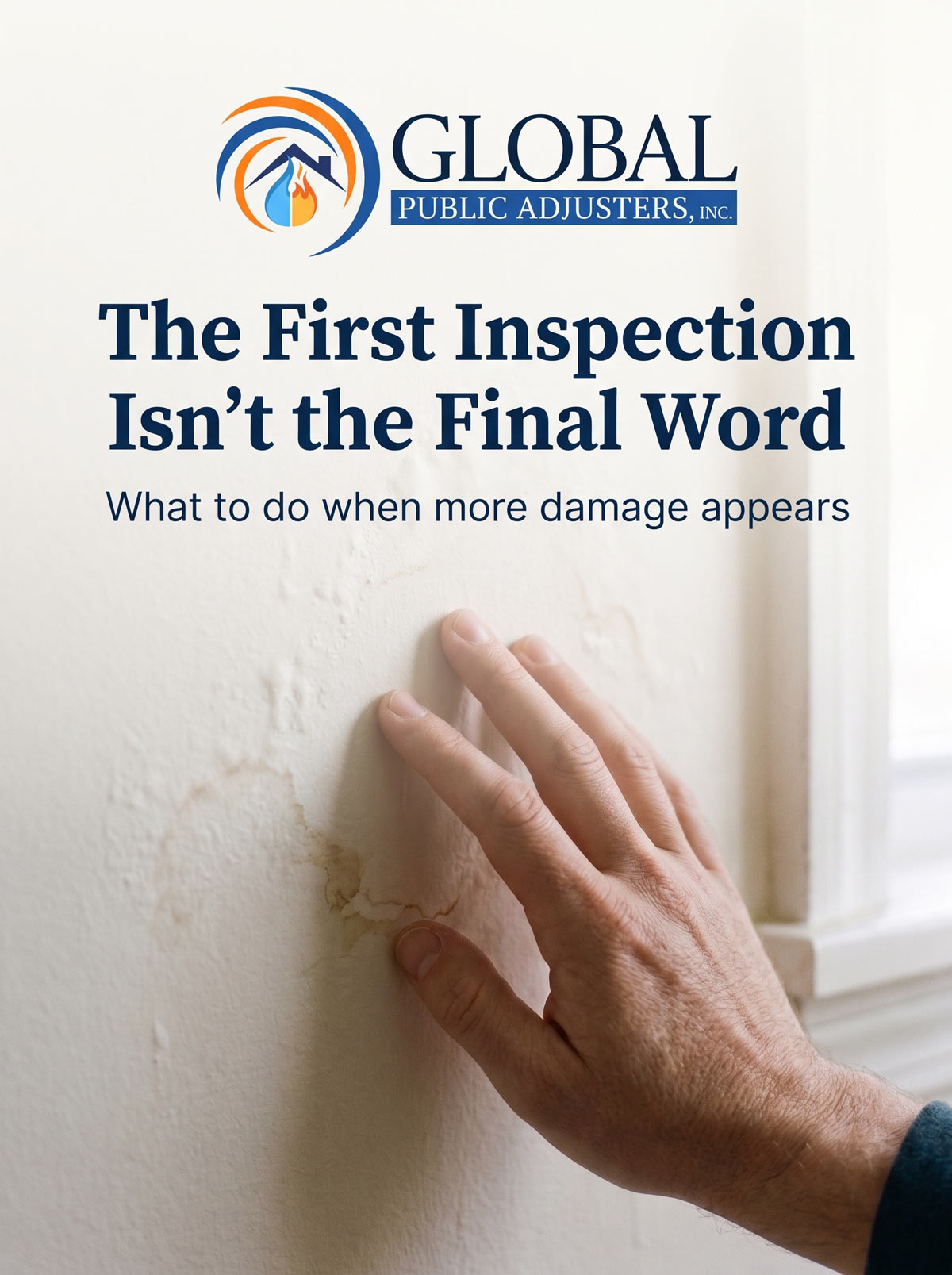
After a hurricane or severe storm, damage has a way of introducing itself slowly. A ceiling stain grows. Flooring starts to buckle. A contractor opens a wall and finds wet insulation nobody could’ve seen. These discoveries are stressful, especially when the claim’s already been inspected or an estimate has already been issued, and it’s natural to wonder whether the window for a fair outcome has closed. Take heart, because it usually hasn’t. A first inspection is a snapshot of what was visible and accessible that day, nothing more. It doesn’t mean every later concern is automatically covered, and it doesn’t mean newly discovered damage will automatically be rejected either. What it means is that documentation has a second chapter, and how you handle it shapes the claim.
Protect People and Limit Further Damage First
If water’s actively entering, arrange safe emergency mitigation and keep clear of sagging ceilings, compromised electrical systems, unstable roofs, and contaminated water. Use qualified professionals for hazardous or structural work, and don’t delay emergency measures just to wait for an insurer’s response. Do document the condition before work begins whenever it’s safe to do so, and ask the mitigation company to explain its findings, recording moisture readings and affected materials where appropriate. Their professional record becomes part of yours.
Create a Record of What Changed
The heart of a supplemental claim is a clear before-and-after story, so build it deliberately:
- Photograph the newly discovered condition from several angles, wide views to show where it sits and close-ups to show the damage itself
- Write down the date it was noticed, what work was underway, and who identified it, and save the contractor reports, moisture maps, invoices, and communications
If damage hides behind a wall or under flooring, ask the professional to document it before removal when practical. And resist the urge to guess at the cause. A qualified contractor can describe the physical evidence, while the policy language determines how coverage gets evaluated. Keeping those lanes separate keeps your credibility intact
Notify the Insurer and Ask About the Process
Contact the insurer promptly and follow the policy’s instructions for reporting additional or supplemental damage. Provide a concise description with supporting documents, then ask the questions that move things forward. Is another inspection needed? Will the claim be reopened or supplemented? What information does the insurer want before repairs continue? Keep the communication factual, keep proof of everything you submit, and if an estimate was already issued, point to the specific line items or areas that need review. Specific beats general in every claim conversation ever had.
Coverage Still Depends on the Policy
Here’s the honest part. Newly discovered damage isn’t automatically covered just because it appeared after a storm. The insurer may consider whether the condition resulted from the reported event, whether an exclusion applies, and whether notice and documentation requirements were met, and a condition tied to long-term wear or a separate water source may be treated differently from sudden storm damage. That’s not a reason for discouragement. It’s a reason for good records, because when the file clearly shows what was first observed, what was later discovered, and how the repair scope changed, everyone can follow the sequence, and legitimate damage becomes much harder to brush aside.
How Global Public Adjusters Helps
Discovering more damage can make a stressful recovery feel uncertain all over again, and that’s exactly the moment an advocate earns their keep. Our public adjusters work only for policyholders. We document the newly discovered conditions professionally, connect them to the reported event with evidence, organize the record, and present the supplemental claim so the insurer sees the full story. We’re doing this work right now for families across Pensacola and the Panhandle after Hurricane Isaias, and we’d be honored to help with yours.
Did more damage show up after your first storm inspection? Contact Global Public Adjusters today for a free claim review, and let’s get the full loss on the record.
