
Your Kitchen Fire Was Small but the Insurance Claim May Be Much Bigger
A fire that’s quickly contained can still leave smoke, soot, and odor in places that are easy to overlook
A pan catches fire, flames reach the range hood, and a quick response brings it under control. Everyone’s okay, and the visible damage seems limited to the stovetop and maybe one scorched cabinet. Then the smoke clears, and the real story starts telling itself. The kitchen smells burnt. A fine film settles on surfaces rooms away. The odor lingers in places that never saw a flame. That’s why a small kitchen fire often leads to a much more complicated insurance claim than a family expects, and here’s the important framing. The goal is never to exaggerate the damage. It’s to identify what was actually affected, document it properly, and make sure the cleanup and the claim address the full scope of the loss instead of just the scorch marks.
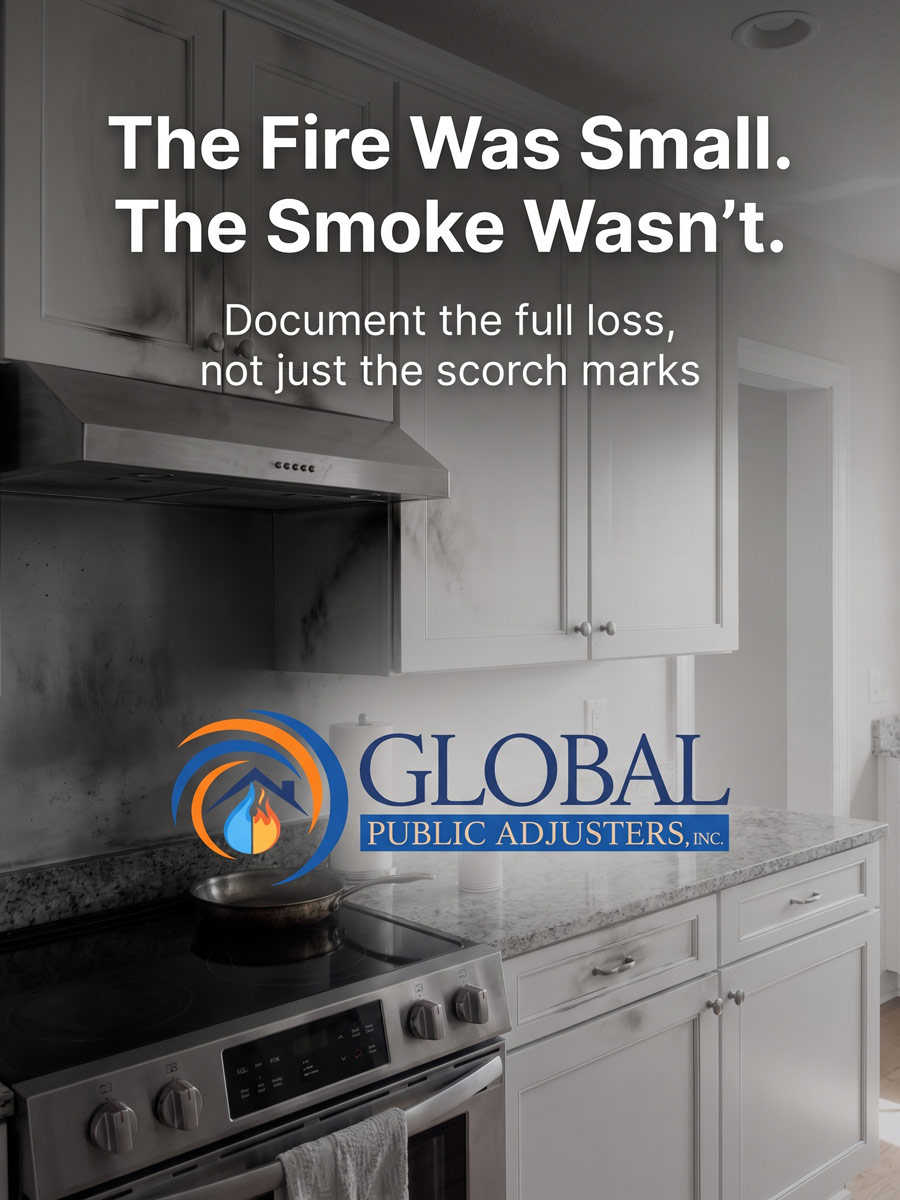
Smoke Travels Farther Than Flames
Smoke and combustion residues move through doorways, open floor plans, vents, and air circulation, and depending on the fire and the materials that burned, residue can settle on cabinet faces, ceilings, light fixtures, window coverings, furniture, and belongings well beyond the kitchen. Odors soak into porous materials and stay there even after visible soot is wiped away. If smoke circulated through the HVAC system, the system may need evaluation too, though that doesn’t automatically mean replacement. The right response depends on the incident and a professional assessment, which is exactly why guessing is the enemy of a fair claim.
Document Before You Clean
The instinct after a fire is to scrub everything immediately, and it’s an understandable one. Resist it long enough to build the record:
- Photos and video of the stove, range hood, cabinets, ceiling, nearby rooms, and damaged contents, in wide views and close-ups, before any cleanup begins
- A list of affected items such as cookware, small appliances, food, clothing, curtains, and electronics, with purchase records where available and notes on anything unsafe to use
Contact the insurer and ask about its inspection process, and if emergency cleaning truly can’t wait, photograph the condition first and keep the invoices. Safety always comes first, so never delay cleanup involving food, electrical, or immediate hazards just to preserve evidence. But everything that can wait for a photo should.
Why Professional Cleanup Is Worth It
Here’s what surprises homeowners. Different surfaces and residues need different cleaning methods, and the wrong approach makes things worse. An unsuitable cleaner smears soot, damages finishes, or pushes residue deeper into porous materials, and aggressive scrubbing changes the original condition before it’s been documented. A qualified fire restoration professional assesses which surfaces can be cleaned, which materials need removal, and how odor should actually be handled, basing the scope on real contamination rather than whether something looks clean under the kitchen lights. That professional scope then becomes evidence in its own right.
How Global Public Adjusters Gets the Claim Right
Fire is commonly a covered peril, but the response depends on your policy, deductible, and circumstances, and this is where estimates come up short. An estimate might cover the stove area while missing the ceiling, the cabinets two rooms away, the contents, or a justified HVAC evaluation. Our public adjusters work exclusively for policyholders. We review the estimate line by line against the documented damage and restoration findings, keep the fire report, photos, receipts, and inspection notes organized into one coherent claim, and press for answers when an affected area goes missing from the numbers. Your family already had the scare. The claim shouldn’t be a second one, and with the right advocate, it won’t be.
Was your kitchen fire quickly contained but the estimate doesn’t reflect the real damage? Contact Global Public Adjusters today for a free claim review, and let’s account for the full loss together.
