
Building a Clear Property Damage Claim After Hurricane Isaias in Pensacola and the Panhandle
After the immediate danger passes, an organized record of storm damage helps property owners get what their policy promises
Storm recovery doesn’t begin when the skies clear. It begins when you start looking closely. A home or business can look manageable from the street while the roof, attic, insulation, electrical components, or interior finishes carry damage that’s anything but obvious. In Pensacola and communities across the Florida Panhandle, property owners returning after Hurricane Isaias are facing exactly that uncertainty, and conditions vary from one neighborhood to the next. So put safety first, always, and then build your record carefully, because the quality of your documentation shapes the quality of your claim.
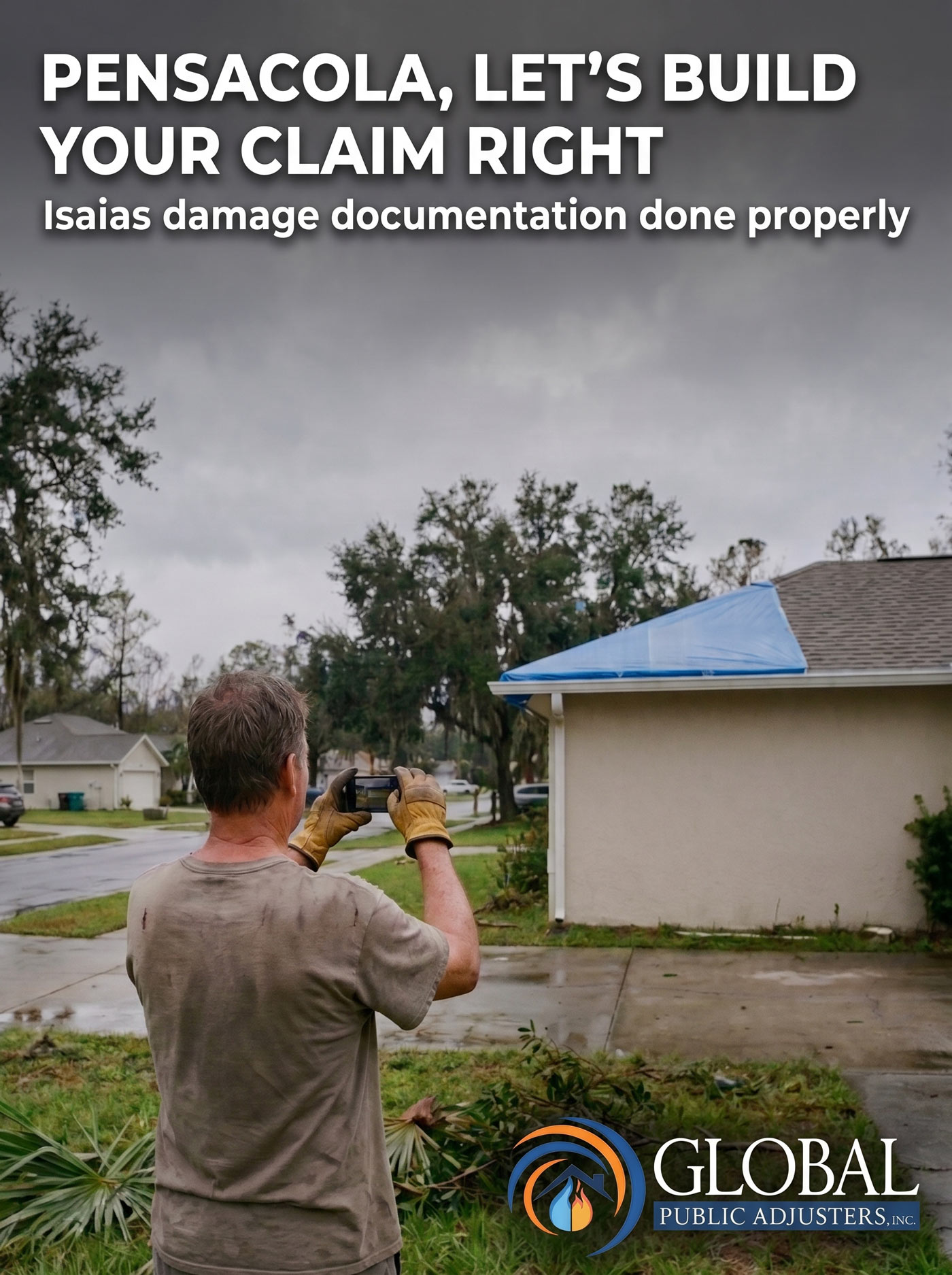
Inspect From a Safe Distance First
Before anything else, look for downed power lines, unstable trees, damaged roof sections, broken glass, standing water, and signs of structural movement, and don’t enter a building officials have told you to stay out of. Never walk into floodwater where electrical hazards or contamination may be waiting. From a safe spot, photograph the exterior, the roofline, gutters, windows, doors, fencing, and any visible impact from branches or debris. If it’s safe to enter, document the interior rooms before moving items or starting cleanup, because the untouched scene tells the truest story.
Look Beyond the Obvious Damage
A missing shingle or broken window is easy to see. What water did after it got inside is not, and that’s where claims get shortchanged. Water travels far from its entry point, so check carefully for the quieter evidence:
- Ceiling discoloration, damp drywall, swollen baseboards, bubbling paint, wet insulation, and changes in flooring, with attics and enclosed spaces often needing professional moisture assessment
- For businesses, affected inventory, equipment, fixtures, computers, and records, plus any interruption to normal operations, with serial numbers photographed when it’s safe
A dry surface doesn’t mean the materials behind it are dry, and in the Panhandle’s humidity, moisture that stays hidden becomes mold that doesn’t. The sooner the full picture gets documented, the stronger the claim stands.
Build an Organized Record
Here’s the system that serves families best. Work room by room, recording each item or area’s location, visible condition, date discovered, and any temporary work performed. Keep original photos and videos with their dates, along with invoices, contractor reports, and receipts for damaged contents and emergency accommodations if your family was displaced. Then create a separate folder just for insurer communications, with claim numbers, emails, inspection dates, estimates, and a brief call log noting who said what and when. It sounds tedious, and honestly, it is a little. It’s also the difference between a claim built on proof and a claim built on memory, and insurers treat the two very differently.
Protect the Property While the Claim Is Reviewed
Where it’s safe and reasonable, take steps to prevent additional damage. Temporary roof protection, emergency board-up, water extraction, and moving belongings out of wet areas may all be necessary, and you shouldn’t delay urgent safety measures while waiting on an insurer’s response. Use qualified contractors for hazardous work, keep receipts and before-and-after photos, and read service agreements before signing, including fees and cancellation terms. Every one of those records becomes part of the claim’s story.
How Global Public Adjusters Helps Panhandle Families
When the insurer’s estimate arrives, compare it against your documented damage. Are all affected rooms included? Does it account for drying, removal and replacement of damaged materials, and the work needed to reach concealed areas? Wind, rain through a damaged opening, and rising water may be evaluated differently, and when part of a claim is disputed, you deserve the reasoning in writing. This is exactly where we come in. Our public adjusters work for policyholders, never for insurance companies. We document the loss thoroughly, review quantities and repair costs, organize the record, and present the claim so it reflects what Isaias actually did to your property. Recovery in Pensacola and across the Panhandle will take time, and nobody should have to fight for a fair claim alone while rebuilding their life
Did Hurricane Isaias damage your Pensacola or Panhandle property, and the damage or the estimate is hard to sort out? Contact Global Public Adjusters today for a free claim review, and let’s build your claim right.
