
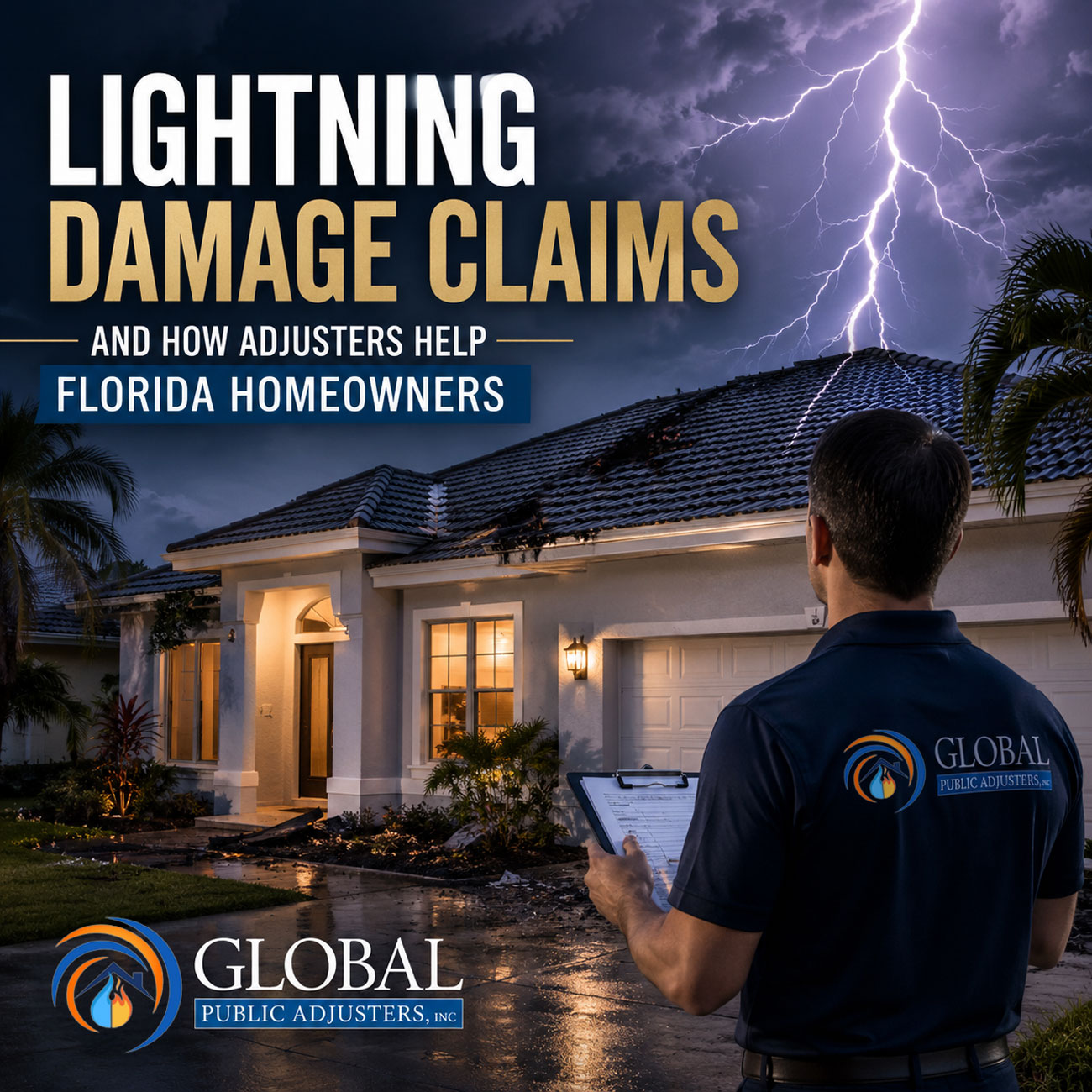
Lightning Damage Claims and How Adjusters Help Florida Homeowners
Florida is famous for its beaches, its sunshine, and something a little less glamorous. Lightning. Our state sees more lightning strikes than anywhere else in the country, and Central and South Florida sit right in the heart of it. Most of us have heard a crack of thunder so close it rattled the windows. What many homeowners do not realize is just how much damage a single strike can do, even when the house itself is never touched.
The Damage You Cannot See
Here is the tricky thing about lightning. When a strike hits your home or even the ground nearby, the surge can race through your wiring in a fraction of a second. It can burn outlets, fry circuit boards, overload your electrical panel, and cook wiring hidden deep inside your walls.
Sometimes the signs show up immediately. Lights flicker, breakers trip, or the whole system shuts down. Other times, everything seems fine at first. Then a week later the refrigerator dies. Then the air conditioner starts acting strange. Appliances that took a hit from a surge often fail slowly, which makes it easy to miss the connection back to the storm.
That hidden damage is not just frustrating. It can be a genuine safety risk. Compromised wiring behind walls is exactly the kind of problem you want found sooner rather than later.
Direct Hits Are Not the Only Danger
Another common misconception is that your home has to take a direct hit for damage to occur. Not true. A strike on a nearby tree, a utility pole down the street, or even open ground close to your property can send a powerful surge through underground lines and into your home’s electrical system. Neighbors on the same transformer sometimes discover they all lost appliances from the same strike.
This matters for your claim, because homeowners often dismiss the possibility of lightning damage simply because they never saw the strike hit their house. If a storm passed through and your electronics started misbehaving afterward, the connection is worth investigating.
Proving What Lightning Did
Insurance companies want clear evidence that lightning caused the damage, and that is easier said than done when the damage is invisible. A professional inspection can identify burned wiring, scorched outlets, and damaged panels that a homeowner would never spot on their own.
A few habits go a long way toward strengthening a lightning claim.
- Photograph every affected appliance, outlet, and electrical panel, even if the damage looks minor.
- Keep receipts for repairs, inspections, and any replacement items you purchase.
- Note the date and time of the storm, since insurers can cross-reference your claim against weather records and lightning strike data for your area.
The more documentation you gather, the harder your claim is to dispute.
Lightning Can Hurt the Structure Too
The electrical system usually gets the headlines, but lightning can also cause physical damage to the home itself. The intense heat from a strike can scorch roofing materials or create small openings that let water in. Those openings might not be obvious right away, but give Florida rain a few weeks and they will make themselves known. A thorough look at the roof after a nearby strike is always worth the effort.
Where a Public Adjuster Comes In
Lightning claims are technical by nature. They involve electricians, inspection reports, policy language, and damage that has to be traced back to a single moment in time. This is exactly where a public adjuster earns their keep. An adjuster works for you, not the insurance company. They help gather evidence, interpret your coverage, and communicate with the insurer so nothing gets overlooked or undervalued.
That expertise matters most with the hidden stuff. Visible damage is easy to claim. It is the burned wiring behind the drywall and the appliance that dies three weeks later that often gets left on the table.
Global Public Adjusters supports Florida homeowners through every step of the process. Lightning is unpredictable, and there is not much any of us can do to stop it. But with the right guidance after a strike, you can protect your home, recover what you are owed, and move forward with confidence.
