
Why Filing a Storm Claim Solo Could Cost You Thousands: The Adjuster Advantage
After a major storm, the instinct for most property owners is to call their insurance company, report the damage, and trust that the process works the way it’s supposed to. That instinct is understandable. You’ve been paying premiums for years. You have a policy. The system should take care of you.
The reality is more complicated than that, and understanding it before you ever need to file a claim is one of the most financially important things a Florida homeowner or business owner can do.
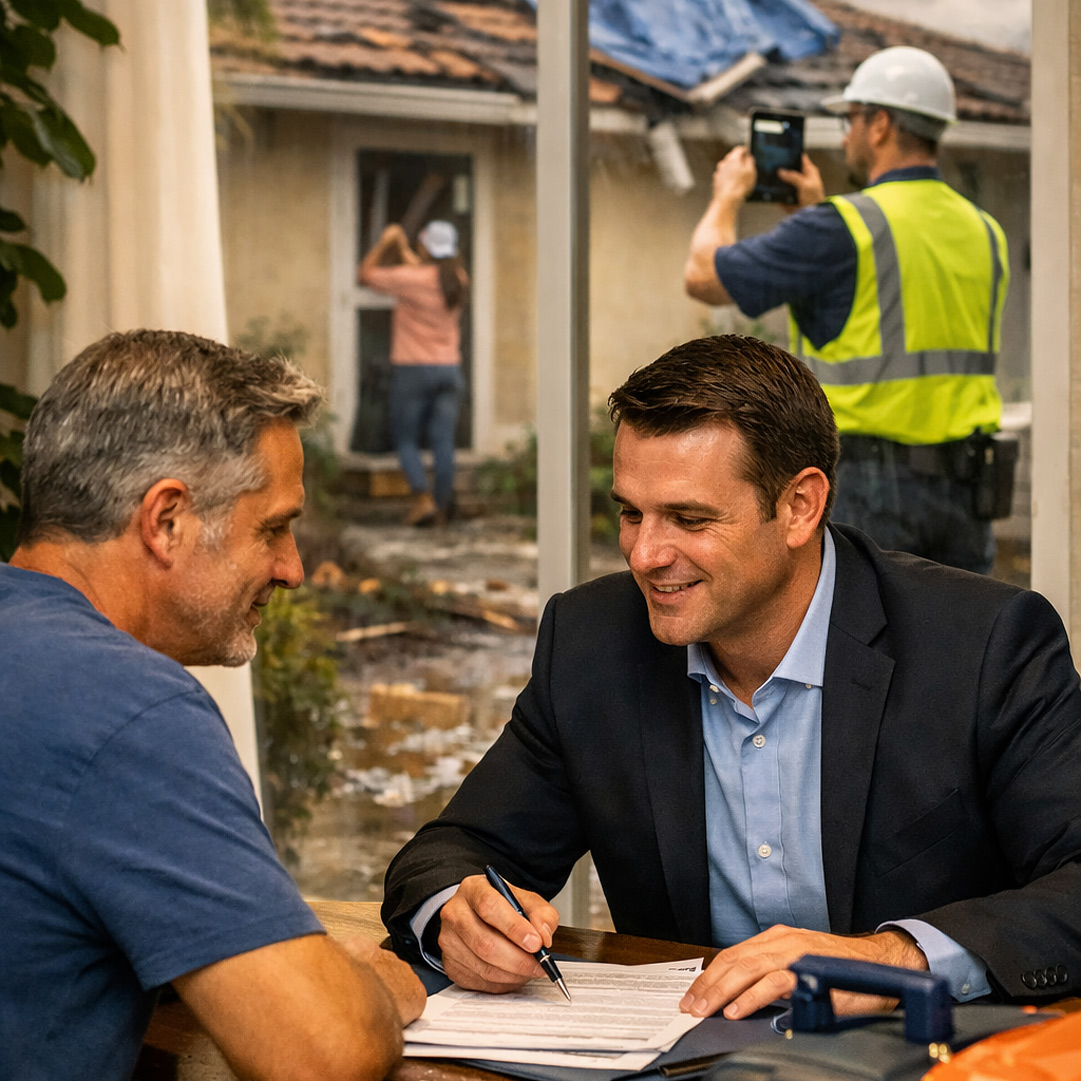
The Adjuster Working Your Claim Works for the Insurance Company
When you report a loss to your carrier, they send an adjuster to evaluate the damage. That adjuster, whether they’re a staff employee or an independent contractor hired by the insurer, is working on behalf of the insurance company. Not you. Their job is to assess the claim in a way that’s consistent with their employer’s financial interests.
This doesn’t mean they’re dishonest. It means there’s a structural misalignment between what they’re there to do and what you need. They use company-mandated estimating software that often produces labor rates lower than current market costs. They may miss hidden moisture damage, secondary structural issues, or coverage categories that your policy actually includes. The result is an initial payout offer that frequently falls short of what a full, accurate assessment would produce.
Most policyholders accept that first number. They’re exhausted, they’re stressed, and they want the process to be over. That decision costs Florida property owners a significant amount of money every single storm season.
What a Public Adjuster Actually Does
A public adjuster is a licensed insurance professional who represents the policyholder exclusively. They have no relationship with the insurance company and no incentive to minimize your claim. Their job is to document your loss as thoroughly and accurately as possible and negotiate the highest supportable payout on your behalf.
In practical terms, that means a few things most policyholders don’t realize they’re missing when they go it alone:
A public adjuster conducts a forensic inspection of your property, not just a visual walkthrough. They look for hidden moisture migration, structural issues that aren’t immediately visible, and damage categories that a carrier’s adjuster might not flag. They write a detailed, itemized repair estimate using current market rates. And they handle all direct negotiations with the carrier so you’re not in the position of arguing with an expert about your own claim without equivalent expertise on your side.
Think about what it means to navigate a legal dispute without an attorney. You might technically be capable of doing it, but you’re at a significant disadvantage against someone who does it professionally. Filing a major property damage claim without representation works the same way.
The Time to Make This Decision Is Before the Storm
One of the most important things to understand about working with a public adjuster is that the best time to establish that relationship is before anything happens. A public adjuster who knows your property, has reviewed your policy, and understands your documentation ahead of time is in a far stronger position to advocate for you when a claim is filed.
That means reviewing your policy language now to understand your actual coverage. It means knowing your hurricane deductible, your exclusions, and your notice requirements before you’re trying to interpret them under pressure. And it means having someone in your corner who already understands your situation when the storm rolls through.
The insurance company has professionals protecting their side of your claim. You should too.
Global Public Adjusters represents Florida homeowners and business owners in property damage claims, from initial documentation through final settlement. If you want to understand your coverage before storm season and have an expert advocate ready when you need one, contact our team today for a consultation.
