
Why Insurance Companies Deny Water Damage Claims — and What Homeowners Can Do About It
Water damage is already stressful. Discovering that your insurance company has denied the claim can feel like a second blow. Unfortunately, water damage denials are among the most common in Florida — and many of them don’t have to be the final word.
Understanding why these denials happen is the first step toward knowing what options are available.
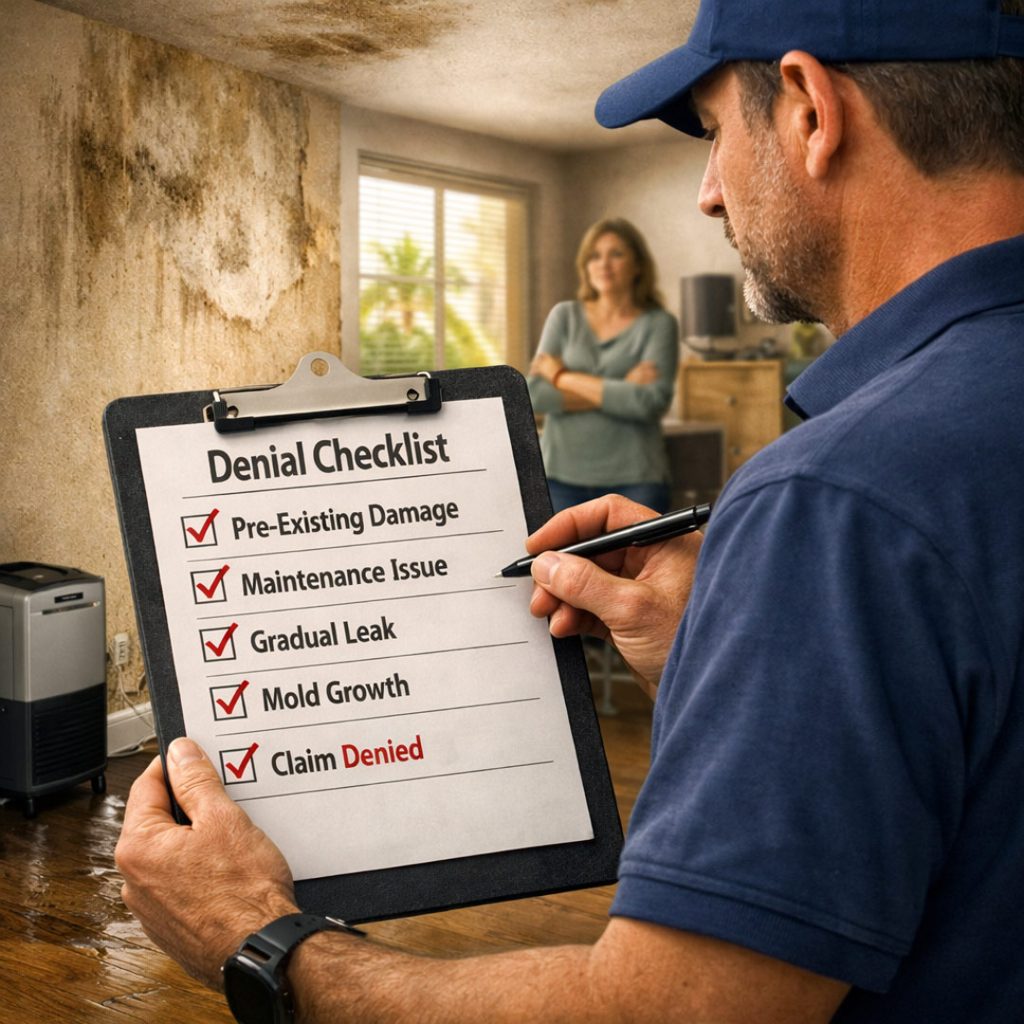
The most common reasons insurers give for denial
Insurance companies rarely deny claims without a stated reason. The challenge is that those reasons are often based on their own inspection — which may not tell the full story.
Some of the most common denial arguments include:
- The damage was gradual or long-term, not the result of a sudden event
- The homeowner allegedly failed to maintain plumbing or appliances
- Mold present in the home is attributed to neglect rather than a covered loss
- The water source falls under a policy exclusion, such as flooding or groundwater
Each of these arguments is designed to shift responsibility away from the insurer. But each one can also be challenged — especially when the right documentation is in place.
What a public adjuster does differently
When a homeowner handles a claim alone, they’re often working with limited tools and up against an insurer’s own team. A public adjuster works exclusively for the policyholder — not the insurance company.
After a denial, a public adjuster can:
- Re-inspect the property with professional-grade moisture detection equipment
- Identify hidden water damage that wasn’t captured in the initial inspection
- Determine and document the true origin and cause of the damage
- Build a detailed scope of loss with supporting evidence
- Negotiate directly with the insurer on the homeowner’s behalf
The evidence that actually moves the needle
Vague complaints rarely overturn denials. What changes outcomes is specific, documented evidence. Public adjusters rely on tools and reports that carry real weight in the claims process:
- Moisture meter readings that map the spread of water through walls and floors
- Thermal imaging that reveals damage invisible to the naked eye
- Third-party expert reports that establish cause and timeline
- Repair estimates from licensed contractors
- Careful analysis of policy language to identify what is actually covered
This kind of documentation makes it significantly harder for an insurer to hold a denial position — and often leads to settlements well above the original offer.
A denial is not always the end of the road
Many Florida homeowners walk away from legitimate claims because they don’t realize a denial can be disputed. With the right documentation and someone advocating on their behalf, the outcome often looks very different.
The key is acting quickly. Evidence degrades, moisture spreads, and deadlines in insurance policies are real. The sooner a public adjuster gets involved after a denial, the better the position a homeowner is in.
If your water damage claim has been denied in Florida, Global Public Adjusters can take a fresh look. Contact us today for a consultation and visit globaladjustersfla.com to learn more about how we fight for policyholders.
